
Abstract
War, famine, unemployment and cultural persecution witnesses waves of displaced human refugees migrating away from their country of origin, seeking asylum in geopolitically and economically stable countries throughout the world. From Syrian families to North African migrants, acute displacement of entire social and culturally diverse peoples into established geographically distinct locations creates incredible bilateral physical and mental health pressures on both established communities. Inevitably because of cultural distinct behavior, prejudice, bias and persecution are predictable reactions from established sovereign societies whose governments attempt to balance humanitarian responsibilities with the practicality and political ramifications of open border policies. The demands placed on host countries are enormous and efforts extended as good will gestures for altruistic needs can become overburdened with reactionary reprisal from host citizen further preventing assimilation and/ or integration of the refugee population. The civil backlash and fear of migrant majority-identified reactive fate-groups who tend, after their settlement and integration into the host countries, to form politically-oriented revolutionary groups that challenge host country authority, threaten acceptance of desperate souls seeking asylum from geopolitical and environmental threats. Recent hostilities between ethnically displaced Sunni Muslims from Afghan and Syrian heritage on Danish soil that caused damage to property and injury to Danish police officers personify the cultural clashes that will impose misery on law desiring global citizens and prevent access to critical support services these migrants need to survive in their new locations. This paper addresses barriers to ethnic and cultural assimilation and integration into host countries.
The Refugee
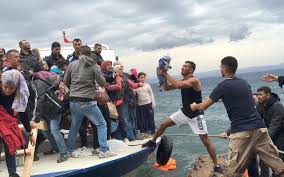
The worldwide refugee crisis threatens peace, civility, national prosperity and the survival of people fleeing the ravages of war, famine and political oppression. The number of forcibly displaced people worldwide reached almost 60 million at the end of 2014, the highest number in the past 70 years. This egress, particularly related to war, is a humanitarian tragedy. In the last two years, 15 million people fled Syria and Iraq; 1.1 million people have been displaced in Yemen; more than 500,000 have fled South Sudan; 190,000 in Burundi; and 300,000 in Libya. (Aiyer 2016) As persons desperately apply for asylum outside their home country, their goal is to obtain refugee status which affords them legal protections and guaranteed resources. The UN charter for host nations, established by the United Nations Refugee Agency (UNRA) was ratified into law in 1951. Modifications in 1967 established protocols defining a refugee as someone crossing an international border “owing to a well-founded fear of being persecuted for reasons of race, religion, nationality, membership of a particular social group or political opinion.” (Gibney 2004; Ott 2011; UN 1951) These international laws addressing asylum offered by a host nation come at significant economic demands and cultural challenges for the receiving states. The savior nation has the mandate for both protection and durable solutions for displaced individuals. (Gray 2001) Implicit in this obligation is consideration of these refugees with natural laws, owing that every individual must be respected with basic human rights. One states failure to protect their citizens results in a secondary state rising to offer sanctuary, respecting these inalienable rights with their dedicated responsibility. (Betts 2009; Gibney 2004) The massive and acute movement of displaced persons causes host countries to pursue expedient and fluid solutions to accommodate these refugees while demands from their own citizens require they ensure domestic security, economic stability and social tranquility.
The humanitarian response
The outcry from nongovernmental organizations, religious groups and world citizens often drowns out government ambivalence and demands consideration of oppressed people. Internationally, the United Nations refugee agency (UNHCR) acting cooperatively with agencies in host nations, provide structure and guidance for assimilation and integrating these displaced people. Most accepting nations including the EU and the United States (US), adopt these recommendations and mandates for processing, protecting and accommodating refugees. Refugee protection through resettlement and access to a social welfare support systems becomes the cornerstone of this international obligation. In each country refugee resettlement collaboratives exist to provide cultural amalgamation and adaptation, assisting some 60,000 to 90,000 persons per year in the US alone. Here, the refugee must navigate through the maze of Homeland Security and the State Department before the Office of Refugee Resettlement (ORR) in the U.S. Department of Health and Human Services. This agency is responsible for providing resettled refugees longer-term assistance, language education and social services that focus on early employment and self-sufficiency. (Nezer 2013) Nevertheless, despite its noble assignment, both the US and overburdened EU programs are chronically underfunded and failing to meet refugee needs. In addition, the policies are rigid and do not address divergent health and socioeconomic factors specific to certain refugee groups. (Nezer 2013) Many refugees require extended services in medical and psychological care, intensive local language training, and repetitive assistance at finding employment. (Ott 2011) Equally tragic is that some refugee groups have highly educated individuals with professional experience, but the prolonged pathway to US recertification makes their professional experience obsolete. (Abramowitz 2009) Common conflicts result from failed expectations and lack of participation between community members, stakeholders, and resettlement authorities.
We read daily about the surge of asylum seekers taxing countries throughout the EU. These sovereign economies are beyond capacity to respond to the humanitarian challenge, process asylum requests, and prepare for the integration of those accepted into their labor market. (Aiyer 2016) Security, political, and social challenges are overwhelming. From the 12 million people in the Middle East demanding immediate refuge and asylum, to the several African nations in turmoil forcing hundreds of thousands of people to flee, access nations are choking from the burden. Throughout Europe the doors are closing to displaced people, foreshadowing misery and even genocide at staggering numbers. The moral gesture of benevolent aid is so strained that conflict within the communities receiving refugees is inevitable and aggressive dispute resolution strategies must address these issues with premeditative planning.
Concepts of assimilation and integration
The distinction between assimilation and integration into a new society should be differentiated. Assimilation occurs when the group dissolves into the dominant society, while integration denotes interaction with the dominant society while maintaining one’s own cultural distinct identity. Resettlement is a complex issue designed to meet superordinate goals like economic prosperity, cultural integration, and refugee well-being. Unfortunately, current agencies are unable to prevent or defend the refugee from racism, prejudice and financial strain, focusing on immediate relocation and substantive immediate survival requirements instead of long term strategies for peaceful co-existence in their new communities. (Gray 2001). Refugees should not be coerced to choose between successes in a new society by abandoning their cultural identity. Instead of measuring successful integration by assimilation, Rodríguez-García proposes a new model of refugee resettlement and cultural acclimatization which “reconciles cultural diversity with social justice and political equality.” (Rodríguez-Garcia, 2015) Globalization might physically mix cultures, but globalized cities are more polarized in terms of race, with cultural clashes segregating native from refugee populations throughout Europe and America. (Rodríguez-García, 2015) The opportunity to integrate into a society and blend cultures while protecting ones identity is precarious for both recipient population and displaced refugee. A 1997 UNHCR report on the integration of resettled refugees noted that the constraints to resettlement included lack of employment, racism, discrimination, delays in family reunification, inability to speak the local language, lack of recognition of qualifications and experience and inadequately resourced integration programs. (Chitkara 2015; Gray 2001)
Kunz argues that refugees’ orientation to their country of origin has a significant impact on resettlement. He identifies three different groups: First, ‘majority-identified’ refugees who identify with their nation but not with its government; second, ‘events-alienated’ refugees, which may include religious or racial minorities, with no intention to return to their home; and third, ‘self-alienated’ refugees, who no longer wish to identify with their nation. Refugee groups may also be ‘reactive fate-groups’ or ‘purpose groups’ depending on their attitude to displacement. Reactive fate-groups are typically made up of majority identified and events-alienated refugees fleeing from war or revolutionary change. (Kunz 1981) Although most groups assimilate into the host culture, many maintaining their own culture in duality, the majority-identified reactive fate-groups who still identify fiercely with their own countries tend to integrate poorly, form political groups, and demonstrate the highest risk of negative interaction with the host society. (Gray 2001)
Refugees are in a power submissive situation that creates conflicts intrinsic to feelings of victimization once the luster of resettlement has waned. As Roy (2008) discussed, power dynamics are seen in cultural and structural interactions when dealing with the integration into different cultures. Conflict is inevitable. Since power is identified as a process evolving and influencing people through a multilayered and fluid set of relationships, this power will be formed and manipulated by the social structures within which the native population with the resources have power-over the newly arrived refugee. Roy asserts that power is embodied in cultural practices causing influence through organizational roles and cultural structure. For a host population exerting power over relocated foreigners, the power differential may lead to significant conflict.
The challenge of accepting refugees
A 2010 US Senate report charged that “resettlement efforts in many US cities are underfunded, overstretched, and failing to meet the basic needs of the refugee populations” and highlighted the significant issue of secondary migration, or refugees relocating from their initial location in the US. (Ott 2011) The office of Refugee Resettlement (ORR) is tasked with providing refugees with critical resources to assist them in becoming integrated members of American society, but the funding, grants and assistance are calculated and dispersed at the initial entry points and do not follow the refugees that migrate within the US. People move primarily for family and jobs but the internal relocation creates greater demand for services with less resources. (Ott 2011) Cultural assimilation emerges as one of the most complex issues related to resettlement. Morgan argues that prioritizing assimilation leads to a “de-ethnicization challenge” (Morgan, 2015.). As an alternative, he suggests that settlement agencies should focus on finding solutions that ensure refugees retain their own culture while still becoming part of a new community. In addition, functional integration includes participation and contributions to the host social, cultural and economic life through employment and education. Collaborative agencies must match opportunities with refugee skills while providing adequate universal healthcare for physical, psychological, and spiritual wellbeing. The core unit of support, the family, must be reunited. Cultural exchange will introduce bicultural enrichment. Governments can no longer shoulder the economic responsibility of this humanitarian mandate so these goals are now achieved through public-private partnerships between state run agencies and NGO philanthropic organizations, religious groups and municipalities.
Conflict in the refugee population
Global research demonstrates a positive economic impact on local communities expanded by influx of refugee populations, but community relationships can be threatened through cultural misunderstandings and discrimination, especially when refugees appear to be benefitting from social welfare and job creation disproportionately to the local citizen. (Guerin 2007; Ott 2011; Ager 2008) The strained relationship creates an atmosphere of tension and distrust. Unfortunately, conflict within and against the refugee culture does result in ethno civic rejection and upheaval through bias, xenophobia, political backlash and ultimately violence. The foreign culture becomes the target of anger and vehemence. As Galtung notes, (Galtung 1990) ‘Cultural violence’ is used to legitimize oppression in its direct and structural forms. Threats and perceptions of compromised safety by the refugees leads to misery, morbidity, loss of identity and purpose through alienation and perceived limited freedom. Violence is needs-deprivation causing hopelessness, a deprivation/frustration syndrome that causes apathy, withdrawal and in some, outward aggression and civil unrest. (Galtung 1990)
Racism and discrimination are pervasive based primarily on ethnicity, culture and religious affiliations. Refugee exposure to repetitive physical and psychological trauma creates medical challenges, particularly in mental health care and healthy living choices. This in turn effects employment productivity and peaceful coexistence within and outside their communities. (Chitkara 2015). Paradies (2015) defines racism as an “organized systems within societies that cause avoidable and unfair inequalities in power, resources, capacities and opportunities across racial or ethnic groups.” Racism manifest in several ways, including aggression, stereotypes, and discrimination. Refugees report inequality in the job market as well as racist slurs in the streets and damage to personal property.
Refugees arriving in their new country experience an initial period of excitement and enthusiasm, followed frequently by feelings of survivor’s guilt and displacement anxiety. This distress may result in prolonged sadness, despondency and depression. Additional threats from racism and discrimination only worsen this condition. The flames of discontent and barriers to resettlement create conflict within the community between refugees and with locals. Without a strong ethnic support community, maintaining traditional social and familial practices is impossible as refugees attempt to balance the need for integration with the desire to maintain their cultural integrity. Some groups of refugees are unable to establish strong and united ethnic communities because “old political allegiances continue to influence and divide refugee communities.” (Gray 2001)
In both EU countries and the US, economic downturns and higher unemployment rates cause serious regional budget shortfalls. One effect is a rise in anti-immigrant laws across this country with challenges from many communities to refugee relocations because of additional taxation to finance resettlement. There are statewide legislative and executive efforts to restrict and deter refugee resettlement. This anti-refugee sentiment has emboldened local officials looking to target refugee resettlement with anti-immigrant legislation. (Nezer 2013; NIJC 2012) New refugees are openly opposed. People are resentful when scarce resources supplemented through federal funding defer medical, education, housing, and transportation needs to the refugees over the local population. In particular in the US, rural communities now see a rise in relocation of entire cultural groups of refugees. In these smaller communities the visibly different cultural, racial, and religiously affiliations in previous homogeneous communities breeds incidents of racism and prejudice.( Gray 2001) People in the host country might also misinterpret factors driving refugee relocation misattributing the displaced people as having ‘chosen’ to move, exploiting better economic opportunities in the host country at the expense of the native population. The concern about newcomers and their impact on a community’s established way of life is heightened now that many refugees resettled today are Muslims. Valtonen (1998) points to racist attitudes against Muslims as the predominant factor hindering successful social interaction within receiving society. The few cases of refugees connected to terrorism creates a nationalistic xenophobia that generates support for anti-immigration and anti-refugee assistance even from political moderates. Women in particular deal with prejudice and hostility resultant from restrictions on their dress and introverted social mannerisms, following the traditions of their own country, but stark behavior in their new melded cultures. (Grey 2001).
Potential solutions to conflict resolution
As Avruck and Black propose, ethno-conflict theory and associated conflict resolution techniques stress that cultural orientation must be critically considered to formulate models for successful dispute resolution. (Avruck 1991) Group identity through cultural awareness is secondary only to food and shelter for humans to find meaning in their lives and threats to this cultural harmony stress the fabric of existence for any sub group in society. Avruck stresses that the cross-cultural perspective on conflict management requires local practical understanding and traditional methodology of dispute management. These techniques and practices (ethno-praxis) in refugee populations will likely be different and possibly adverse to the local methods traditionally used to address conflict situations.
Research demonstrates that refugees are empowered through early employment and become active, contributing participants in their communities when ethnic support and family stability is available. (Ott 2011) In the US, the 1980 Refugee Act requires “available sufficient resources for employment training and placement in order to achieve economic self-sufficiency among refugees as quickly as possible” in order to maintain the diversity of cultural expression during integration, the concepts of acculturation are supported. (Kenny 2011) Individuals embrace and participate in the dominate culture without divorcing or suppressing their own unique social heritage and traditions. When host communities understand the benefits of the cultural diversity, express humanistic acceptance of different perspectives and support ethnically diverse integration that modifies the status quo, the refugees report a welcoming environment where they feel less alienated and adopt a morphogenic diverse new cultural narratives as their own. (Berry 1997)
Local policies demand integration with refugee leaders collaborating to establish functional groups for successful co-existence that enriches both refugee and local civic objectives. The multitude of additional agencies, such as trades unions, not-for profit enterprises, and employers might complement and support immigrant integration and minimize prejudicial rejection and intended alienation. Finally, a number of current refugee /host partnerships stimulate independence by supporting immigrant entrepreneurship. (Bruno 2011). Establishing culture specific immigrant associations provide the first line of access to successful transition, access to economic opportunities, social support services and psychosocial support designed to resolve the fears inherent in relocation. Factually, evidence shows that refugees often stimulate economic development by increasing the tax base, starting new businesses, revitalizing neighborhoods, filling labor shortages, attracting investment from overseas, renting apartments, patronizing local businesses, and bringing federal funds directed toward schools and other public programs to local communities. (Elliott 1997)
Nezer (2013) has a series of recommendations designed to preemptively anticipate conflict and prepare for seamless integration, respecting autonomy but stimulating ethnic integration through collaborative systems design. Specifically, she calls for resettlement agencies to launch a funded, proactive organizing initiative, coordinated nationally but strongly rooted in local action, to raise awareness in communities about the benefits of resettlement and proactively prevent resettlement backlash. Nezer demands a quick response plan to address emerging anti-resettlement activity while generating a new “buzz” and talking points that discuss the humanitarian goals of resettlement and historical role of the US in protecting these needy souls. She believes that the most successful plans to integration require partnering with immigrant advocates who ensure collaboration on advocacy in areas of stress or conflict. Given the economic resources allocated each year on refugee relocation, a dramatically improved federal tracking system that measures and reports success must be made transparent for the host country citizens to understand and accept the benefits of cultural diversity and refugee assimilation. Ultimately, the systems in place that are successful must be replicated globally to ensure efficiency and successful refugee relocation programs are celebrated and reproduced.
In Conclusion, the role of the ADR professional.
Refugee insertion into unprepared communities defensive about shared resources creates a critical access point in which expertise in dispute resolution structure and application will have effective impact and create lasting peaceful co-existence. Critical pathways designed to proactively address refugee physical, mental and spiritual needs, orchestrated with collaborative efforts by recipient community stakeholders working together with refugee advocates and leaders, provides prospects for transformational cultural exchange. As Beth Roy points out, we need to be willing and able to engage without judgment about both “intentions and consequences of cultural styles, as we see them occurring in the room, in the context of people’s historical and cultural experiences in the world.” As such, we have the unique perspective to separate ourselves from the dynamic of conflict utilizing the skills and motivation to empower foreign people while demanding justice and equity. The ADR professional can be a powerful agent for change, challenging inequality and taking on the creative process of “rebuilding relationships as exercises in justice”. (Roy 2008).
Conflict resolution experts subserve multiculturalism, stressing tolerance to variables such as race, gender, class, age, sexual orientation, religion, physical ability, and language. Facilitating transformational enlightened perspectives regarding diversity through cultural awareness and sensitivity adds to the collective consciousness and enriches the lives of all those willing to repress fear and vulnerability while embracing displaced victims of natural or geo-political dislocation. (Loode 2011) Dialogue between participants stimulates shared ideas and experiences which might convert prevailing wary discrimination and even subliminal prejudice. (Banathy 2005.) Dialogue encourages participants to examine and share “preconceptions, prejudices, and the characteristic patterns that lie behind their thoughts, opinions, beliefs, feelings, and roles” (Bohm 1991). ADR professionals are uniquely qualified to combat modern racism through systems design in communities integrating refugees. Focusing on trust building while moving beyond a calculus based cautious hand of minimal assistance to a knowledge based trusting co-dependence where bias, prejudice and faulty attributions errors steeped with animosity no longer imprisons ignorant minds. Through advocacy, facilitation and mediation of anticipated and evolving conflict, the ADR professional might follow LeBaron’s (2003) advice using dialogue “to understand the influence of existing cultures and the differences that distinguish them without letting a particular culture or cultures dominate the discourse.” By providing insight into both refugee and host citizens values, logic, and stories both people will realize that despite language and customs differences, their interests and core needs are often closely aligned, effectively bridging intercultural conflicts through awareness, acceptance and mutual respect.
Works Cited.
- Abramowitz, M et al. Iraqi Refugees in the United States: In Dire Straits, June 2009, International Rescue Committee report. New York, NY 10168 | theIRC.org
- Ager, A. and Strang, A. (2008) ‘Understanding Integration: A Conceptual Framework’, Journal of Refugee Studies, 21(2): 166-187.
- Aiyer, S, Barkbu, B et al. (2016) The Refugee Surge in Europe: Economic Challenges. IMF publication. Feb 2016.
- Avruch, Kevin (Jan 2016). Culture and Conflict Resolution United States Institute of Peace. (Kindle Locations 493-496).
- Avruck, K and Black, P. (Jan 1991) The Culture Question and Conflict Resolution. Peace and Change. Vol 16 (1) pp 22-45
- Banathy, B. H., and Jenlink, P. M. (2005) Dialogue as a Means of Collective Communication. New York: Kluwer Academic/Plenum, 2005. Pp 39-43
- Betts, A. and Kaytaz, E. (2009) ‘National and International Responses to the Zimbabwean Exodus’, New Issues in Refugee Research, UNHCR paper 175, July
- Berry, J. (1997) ‘Immigration, Acculturation, and Adaptation’, Applied Psychology: An International Review 46(1): 5-68.
- Bruno, Andorra. (2011) U.S. Refugee Resettlement Assistance. Congressional Research Service, CRS report for congress. January 2011.
- Chitkara, Hirsh, Gao, Yilin et al. (2015) American Resettlement Agencies and Their Effectiveness in Helping Middle Eastern Immigrants and Refugees Navigate Social and Financial Challenges. Office of Refugee Resettlement Annual Report to Congress. U.S. Department of Health and Human Services, 11 June 2015
- Elliott, Samuel. (1997). ‘Like Falling Out of the Sky’: Communities in Collision. In C. Bell Ed. Community Issues in New Zealand. Palmerston North: Dunmore Press Ltd
- Galtung, J. (1990) Cultural Violence. Journal of Peace Research, vol. 27, no. 3, 1990, pp. 291-305.
- Gibney, M. (2004) (7) The Ethics and Politics of Asylum, Cambridge Press 2004
- Gray, A and Elliott, S. (2001) Refugee Resettlement Research Project ‘Refugee Voices. New Zealand Immigration Service. Dept. of Labor. May 2001
- Guerin, P. and Guerin, B. (2007) ‘Research with refugee communities: Going around in circles with methodology’, The Australian Community Psychologist. Vol. 19(1)
- Kenny, P. (2011) ‘A Mixed Blessing: Karen Resettlement to the United States’, Journal of Refugee Studies 24(2)
- Kunz, E. F. (1981). Exile and Resettlement: Refugee Theory. International Migration Review, 15(142)-51
- LeBaron, M. (2003) Bridging Cultural Conflicts: A New Approach for a Changing World. San Francisco: Jossey-Bass, 2003.pp 269-271.
- Loode, S. (2011) Navigating the Unchartered Waters of Cross-Cultural Conflict Resolution Education. CONFLICT RESOLUTION QUARTERLY, vol. 29 (1)
- Morgan, John H. (2014) Islam and Assimilation in the West: Religious and Cultural Ingredients in American Muslim Experience. Journal of Religion & Society 16 (2014):
- Nezer, Melanie.(2013) Resettlement at Risk: Meeting Emerging Challenges to Refugee Resettlement in Local Communities. JM Kaplan. Feb 2013.
- (2012) No Victory for Arizona: Supreme Court Strikes Down Most of SB 1070 Immigration Law, Punts on “Papers Please” Provision, Immigrant Justice, June 25, 2012. http://www.immigrantjustice.org/press_releases/SupremeCourtSB1070ruling.
- Ott, E (2011). Get up and go: refugee resettlement and secondary migration in the USA. Oxford press. Division of International Protection UNHCR, Geneva. Sept 2011.
- Paradies, Yin et al. (2015) Racism as a Determinant of Health: A Systematic Review and Meta-Analysis.” PLoS ONE 10.9 (2015)
- Rodríguez García, Dan. (2010) Beyond Assimilation and Multiculturalism: A Critical Review of the Debate on Managing Diversity. Journal of International Migration and Integration 11.3
- Roy, B. (2008) Power, Culture, Conflict. In Re-Centering Culture and Knowledge in Conflict resolution Practice. Syracuse University Press. 2008. pp 179-194
- UNITED NATIONS (1951) United Nations Treaty Collection Convention relating to the Status of Refugees, Geneva 28 July 1951.
- Valtonen, K. (1998). Resettlement of Middle Eastern Refugees in Finland: The Elusiveness of Integration. Journal of Refugee Studies, 11(1), 39-60.
 Renaissance Reflections of a Physician and Surgeon