A Better Medical ADR Ombudsman

A Better Medical ADR Ombudsman

As a clinician for 25 years plus training, my entire world has been managing the physician-patient relationship. On one hand, I have to be a scientist and apply all the technical knowledge about disease management, while in the other, a compassionate salesman, convincing often frightened and wary patients any families to trust my skilled hands after just a few meetings in the safe surrounds of the outpatient clinic or hospital, when they are still conscious and can process what I am saying; experiencing all of the fear and trepidation associated with this conversation. My skills in negotiation really come from doing pediatric neurosurgery (as a necessity, not on purpose), for if there is ever a time when conversations require delicate conflict management skills, it is with parents of sick children.  The quick response of anger and hostility when the clinical course is not just perfect, or even when the diagnosis is poor and the family projects their anger and disbelief on to the healthcare providers, as if we caused the disease. All of these incidence require a calm understanding of the situational extreme emotional, visceral, hind brain response that is fueled from adrenaline laced with some unknown bio-reactant that only a strong benzodiazepine (Valium) can calm. medical5

As a neurosurgeon, I have been involved with every type of conflict, disclosure and the process of litigation and medical board battles. The system is so broken, beyond what we have studied, and the compromised communication between provider and patient is merely a reflection of the painful administrative oppression that healthcare providers endure from every type of regulatory agency, peers and law firms.  These all are quick to accuse and constantly put providers on their highest guard.  I doubt many providers are actually dispassionate but the walls to protect and preserve their emotional sanity keep expressions of compassion deeply suppressed behind the armor that required to survive the turmoil of clinical practice. What we study, the dysfunctional provider-patient discord, is just a byproduct of a larger system that fosters anxiety and fear in the very providers trusted to address the emergencies of physical and psychological disease and discord that bring patients to our clinics and emergency rooms.

HCMP team 2
The collaborative functional system

As Chen points out “Not surprisingly, those patients with the strongest relationships to specific primary care physicians … had a greater influence on the kind of preventive care received” which is really about “patient’s ability to have a longstanding relationship with a doctor, to have a doctor who knows him or her as a human being.” (Chen). But if that relationship is continually threatened by outside influences that punish the provider or make the provider wary about getting close to the patients and disclosing the fragility and dilemma of humanism and the potential for error or with treatments that don’t resolve the issue, how does a provider accomplish the compassion advocated by the Schwartz Center’s theme of compassion as a cornerstone of medical care? Providers fear for their own professional health and security. The provider is under constant attack.

Nevertheless, understanding the potential exquisite role of the ADR medical ombudsman will facilitate healthy relationships between medical staff, a critical need for the health and safety of both patients and the staff themselves. There is a clear pathway on ADR skill utilization and potential adaptation for the healthcare providers themselves who seek to master the role of healthcare ADR specialist. Houk and Amerson paper on the role of apology illustrates the Ombudsman duties quite well and one could really identify with Dr. Greene, the cardio-thoracic surgeon who, as the Captain of the ship, continued to provide the family of the lost boy with the information they needed for closure. “..In light of the lengthy relationship Dr. Greene had established providing Joey’s medical care, he would be the one to disclose the facts surrounding the medical error” ( Houk). The message was clear here, the provider-doctor and surgeon, is expected to have the closest relationship with the family, have trust and compassion and therefore best suited to lead the conversation, within the ADR guidelines, to inform the distraught family.

Pointing out the importance of good patient care
Professional health

The dichotomy is that surgeons, because of time, higher litigation exposure, personality (disorder in my case), are probably the least sensitive of all providers to the social and psychological nuances that go into having these difficult conversations.  Not that they are afraid or purposely insensitive, but usually because delivering bad news is part of the job. Considering the information and context for these delicate adverse outcome conversations, an ADR specialist should probably concentrate on the surgeons’ approach and how they will interact with the family and less about what they are actually going to say.

Lastly, the Kaiser Model and well known medical ADR persona, Dorothy Tarrant nicely summarized the roles and responsibilities of ADR in medical organizations. Quoting her daily duties “I assist patients and providers by helping them to work together to address their needs and interests. This includes acting to fairly resolve healthcare issues, disputes and conflicts by acting as a neutral, independent and confidential resource for patients, families and providers. It is the job of the HCOM to understand the dynamics of patient-provider communication and the relational aspects of dispute resolution…”; this templates the best practices expected to facilitate the doctor-patient relationship assisting in communication necessary to heal the patient when distressed following adverse clinical outcomes.  In addition to these jobs however, we should add to this ( based upon my experiences and 4446563_s-300x300administrative roles as prior chairman of surgery and prior member of credentialing and peer review quality assurance committees), that the consultant or in- house ADR health care liaison should take the time to establish a relationship with the healthcare providers and have a high enough profile to seek out and establish relationships with both nurses and doctors to understand the culture and personalities of the medical “player” at an institution.  There are often physicians seen as disruptive with poor relationships to the administration of the hospital, so despite who is paying the ADR professionals salary, the role must appear, and services executed, as a neutral independent that will not report conversations to hospitals legal department or maintain insider information that the administrators could leverage against the doctor or nurse in future negotiations. In essence, the providers must trust the ADR facilitator/mediator/coach first, when not under duress, to improve both education and functional outcome when a specific patient-provider conflict arises.thank you


Ref:

PAULINE W. CHEN, M.D.; DOCTOR AND PATIENT How Connected Are You to Your Doctor? March 26, 2009

Harvard Center for ADR – The Schwartz Center at http://www.theschwartzcenter.org/

Carole S. Houk, JD, LLM; Leigh Ana Amerson, BA; and Lauren M. Edelstein; Apology and Disclosure How a Medical Ombudsmen Can Help. Bring a Policy to Life By http://www.psqh.com/mayjun08/apology.html

Interview in Modern Medicine with Dorothy Tarrant. http://managedhealthcareexecutive.modernmedicine.com/mhe/Visionaries/Advocacy-with-compassion- Dorothy-Tarrants-role-as-/ArticleStandard/Article/detail/329925

What role does a physician or nurse have in alternative dispute resolution?

It is of no surprise that the term mediation creates a visceral repulsion among most healthcare providers. It is synonymous with the litigation process. Since most healthcare providers that have any experience in litigation is related to medical malpractice, there are very few neurons between “medical malpractice lawsuit” and mediation experience.

In fact, prior to my education in this field, I perceived all mediation as a pre-trial requirement demanding a negotiated solution, where the physician is expected to capitulate and allow insurance adjusters to drive down the value of a medical malpractice claim that could be completely frivolous, yet “get the case settled”. All my colleagues tell me the same thing and even great defense cases have defense attorneys who still advocate for settlement.  It is an economic machine for lawyers and judges that does not reflect justice or even what is right or wrong. AAgvyYh.imgI’ve sat through several mediations all of which were ”mediated” by retired lawyers and I can attest that this is not the Mediation taught in academic ADR programs. This mediation  is coercive legal negotiation in which the lawyer – mediator tries to convince both parties that the trial process, regardless of strength in argument, has no better chance of winning than shooting ducks with a 12gauge shotgun from a subterranean blind at dawn in the middle of winter.

So, it is of no wonder that the label of mediator on one’s white clinical coat, may be seen as a scarlet letter around the hospital instead of “come talk to me I’m your friend.”

Rear view of medical professionals
Rejecting new roles


In the same vein, Conflict Engagement Specialist carries with it the ring of an important title, education, and inquisitive engagement that may in fact crack open the door of traditionally stoic healthcare professionals who are bent on convincing the world they are right, quickly dispositionally defensive and cynical that either colleague or subordinate in the healthcare environment is open to a collaborative and strategic approach to dispute resolution. I know, I sound cynical, but anyone with a few years in the system knows I am also probably right (That’s the surgeon in me talking of course!)

Between the list of skills in this week’s overview and the very informative article by Debra Gerardi, we are provided a glimpse into the world of ADR intersecting with healthcare conflict. As a scientist, the Venn diagram keeps popping into my head.  I believe one of the great skills we can offer is active listening, as Ms Gerardi points out, “ ..listening is typically restricted to information needed to move through the day and is rarely done at a level that enables understanding of a situation where there may be collaboration.“  I can certainly understand now the alternative mindset that requires patience (not patients) and reflective insight with this ADR training. I appreciate the specific recommendations in this article as an academician because it lets me define how to do this job as a physician, shifting from clinical responsibility to conflict management skills.  I like sentences like, “effective conflict management in the clinical setting include, being present in the moment, listening for understanding, mutuality, openness, and reflection.” I can get my mind around that!

cropped-medical1-e1450413022194.jpg

It is apparent that the healthcare providers from our didactic readings have transitioned from the clinical responsibilities in healthcare to a more active and likely all time consuming exhausting role as conflict resolution professionals within their healthcare organization. Perhaps the greatest difficulty as we set out in this field will be to redefine the skills that we bring to the table and utilize the ADR toolbox developed through this educational process. Frankly, it will always be easier for me to listen to a clinical story, rapidly develop a differential diagnosis and recommend a host of laboratory and imaging studies to get to the bottom of the problem. This clinical process is no longer an academic exercise but a daily reality. When we choose to submerge ourselves into the third-party role as facilitator, mediator or coach, we will ask the environment that is so harshly critical of mistakes and perceived errors in medical care, to give us some latitude and allow us to learn the ADR skill sets as a practical application of this academic knowledge.

Pointing out the importance of good patient care
Adopting new skills

As this will take some time, I take solace in the fact that the resultant outcome of dispute resolution can be interpreted in Gestalt and ethereal overview of conflict in general.  If the disputants failed to resolve their differences, this does not necessarily mean that the third-party neutral is not competent. That is very different than the exacting and quite critical demands placed on clinical care, which rarely awards excellence or heroism in clinical outcomes, but quickly castigates and harshly judges poor results, stoning anyone involved in a single patient’s misfortune.  Hopefully, institutions that label us “MD, FNP and RN”, will accept our refocused interests and allow us to expound ADR philosophy as our new mantra.


Workplace Hostility and Patient safety

Does this sound familiar?

“Our organization is suffering from the cancerous wrath of interpersonal conflict, back biting and unregulated angry discrimination that threatens our human resource infrastructure and compromises our ability to deliver superior safe patient care.  Our mission statement is under attack and we must change the culture of organization, implementing several critical pathways to stem this non-physical work place violence.”  The anger and negative attitudes present impediments to the organizations cohesive growth and the partnership we as healthcare professionals represent in shepherding the infirmed and their families through their healthcare crisis.

Team Of Doctors Examining Reports
The Team Of Experts

We are collaterally victimizing the patient and their families as the look to us for professional medical care and compassionate understanding during their crisis. Instead we act is a base self-serving and destructive manner when we fail to institute conflict management rules and techniques that demand everyone on our staff will respect and create a harmonized work environment that is supportive, respectful, mindful and professional to their co-workers.  Examples of nurses fighting, doctors arguing, or doctors belittling nurses, are all in direct distain of quality care mandates and these recurring issues demand much needed management intervention to quickly deal with these quality improvement threats.

4446563_s-300x300Let us scientifically investigate the impact the effects of this hostile work environment. Referencing Maxfield et al work with the AORN and AACN on “The silent treatment.” we see the discussion on this 2010 study of 6500 nurses and nurse managers discussed the impact of compromised communication for any reason in the healthcare work environment.  Hostility between personnel creates this miscommunication and prevents sharing critical patient data.  As this study points out, “creating a culture where healthcare workers speak up…the study shows that healthcare professionals’ failure to raise the following three concerns when risks are known undermines the effectiveness of current safety tools: 1. Dangerous shortcuts 2. Incompetence 3. Disrespect.” So what we see in our personnel hostility is profound disrespect for each other and our system, when a failure to communicate puts patient safety directly in harm’s way.

In addition, we must consider the tension created through unresolved interpersonal conflicts a form of lateral bullying and workplace violence.  This issue is raised in several respectable journals and on-line resources. HCMP team 2 In 2004, Gerardi addressed this as a critical need in any work place and we must consider similar solutions within our hospital environment.  He described the use of mediation techniques to identify conflict early and develop a plan to resolve it by “listening, re-framing the concerns raised, identifying commonalities and clearly defining decisions”. We have at our disposal several well tested dispute resolution techniques and several people within our organization trained or expressing a desire to be trained in this professional management role that our organization desperately needs.  As Maxfield solutions suggest “… when it comes to creating healthy work environments that ensure optimal quality of care, individual skills and personal motivation won’t be enough to reduce harm and save lives unless speaking up is also supported by the social and structural elements within the organization. Changing entrenched behavior in healthcare organizations will require a multifaceted approach and, to this end, the authors provide a series of recommendations leaders can follow to improve people’s ability to hold crucial conversations.” We must adopt guidelines which are memorialized by employee contractual procedure and an institutional commitment at every level, from senior management to hospital personnel and provider-nursing communication.  The doctrine we create and offer for ratification includes a methodology to identify and address access to our system of conflict management for the employees. Here, we outline for reporting abuse; a safe method to report this abuse and not suffer discrimination, retaliation, or termination; the methods our hospital will take to address this report and remedy the issue; the method of investigation of accusations and corrective education when abuse has occurred; and lastly, the follow up communication methods for the person reporting the initial issue. Indicate how the reporting person will receive information about the outcome of the abuse report.

Handshake and agreement
Collaboration is recognized

We have excellent opportunities to improve our healthcare delivery and minimize errors and omissions by supporting conflict management in healthcare. First, we must present a unified and cohesive action plan to the employees but allow them to embrace the concepts and add to the identification process and ideas for resolution of these conflicts as they will then recognize that each employee is a key stakeholder in this process.  In particular when we quote communication statistics of Angermeier, et al and demonstrate how this will protect our patient while improving the atmosphere in their work environment, we are confident we can get them to buy into the need for this professional outlet and methodology.  The opportunities inherent in a conflict management system include: recognition of conflict as an indicator to allow early identification of problems, promotion of a proactive response to problems and conflict, encouragement of a culture of mutual respect, open communication, and problem solving during inquiry or intervention relating to conflict, and a means of working towards potential resolution. The tenants of our management system will emphasize a willingness to acknowledge existence of conflict; open communication between all team members; dealing with conflict within an environment of mutual respect; acceptance and tolerance of different perspectives through the process; commitment to fundamental fairness; educating all stakeholders about conflict management in healthcare; continually reflecting on and modifying our policies and procedures with input from every employee stakeholders and then holding our employees accountable to use the conflict management process.

In summary, we believe the JCHO mandate of 2009 demands we pay attention to these issues and that that the interpersonal conflict between our two nurses locked in angry avoidance exemplifies the difficulty our organization has with poor communication and this is a very real and present danger to our patients.  We cannot tolerate this behavior and provide a safe and effective as well as compassionate work environment.  We implore the administrative governing body to adopt techniques of conflict management into the professional training of every employee and make the training and surveillance of our organization in dispute supervision a top priority going forward.

Pointing out the importance of good patient care

ADR professionals in healthcare.


Ref:

VitalSmarts, AORN, & AACN present: The Silent Treatment Why Safety Tools and Checklists Aren’t Enough to Save Lives by David Maxfield, Joseph Grenny, Ramón Lavandero, and Linda Groah.

Center for American Nurses Lateral Violence and Bullying in the Workplace Approved February 2008.

Gerardi, D. (2004). Using mediation techniques to manage conflict and create healthy work environments. AACN Clinical Issues: Advanced Practice in Acute & Critical Care, 15(2), 182-195.

Mary E. Mills, Conflict in Health Care Organizations, 5 J. Health Care L. & Pol’y 502 (2002). Available at: http://digitalcommons.law.umaryland.edu/jhclp/vol5/iss2/8

Joint Commission Resources: 2011 Hospital Accreditation Standards. Oakbrook Terrace, Ill.: Joint Commission on Accreditation of Healthcare Organizations, 2011.

Angermeier, et al: The Impact of Participative Management Perceptions on Customer Service, Medical Errors, Burnout, and Turnover Intentions. J HC Mgmt 54(2) Mar/Apr 2009.

Complexity Science and Healthcare Solutions

Complexity Science improves our understanding of the healthcare system, a multi-layered organization largely driven by rapidly changing technology and information. In fact healthcare intersects the fundamental study designs used to develop and understand the field of complexity science.  Complexity Science is built on present-day research and thinking about biological models, where systems are viewed as nonlinear and able to adapt to a changing environment. This is different than the classical Newtonian ideas that actions within a system like healthcare need to be cause and effect and strictly hierarchical.  Complex adaptive systems focus on the patterns and relationships among the parts of an organization seen in the healthcare business, in order to understand and act on the unpredictable aspects of working with people in dynamic and successful establishments.  We know that organizations are alive and vibrant, like the human organism.  The metaphor captures the essence of interrelationship between unique parts.  What happens in one part of the organism will be unpredictable but effects every part of the organism.  The organism must adapt to that change, not in an isolated response, but in a flexible and adaptable

Handshake and agreement
Understanding the complex environment

multi-system integrated function that preserves and possibly strengthens the organism from future insults.  When the organism can self-analyze and identify weaknesses relative to a changing environment, then marshal unique internal skills to address the flaw and inefficiency, and those skills are native and respond to the stress to improve the entire organism’s response, the organism demonstrates the theory of a complex adaptive system, the fundamental expression of Complexity Science.  So, understanding the human body as a complex adaptive system and then considering the healthcare initiatives fundamental goal is to perform at maximal efficiency for the good of the patient, requires integrating multiple unique agencies within the system. One must therefore accept that complexity theory fundamentally describes how healthcare systems actually function.

Applications of design improvements and leadership methodology that embraces this theory empowers the individual with responsibility and initiative to creatively apply their skills and knowledge to improve the entire system, even from their unique station or job within that system.  Because of their innovative and diverse backgrounds, individuals in the healthcare system can influence and respond effectively through progressive adaptations to challenges under the complexity science design model. The individual practitioners and allied personnel are the building blocks of the organizational system and at its core, function with a common goal, delivery quality, cost effective medical treatment.  As we study the interfaces between these individuals, the system leaders can look for and stimulate emergent interaction between individuals and observe communication patterns, identify feed-back loops, and explore the edge of creativity from the interface. The leader will identify and model an efficient system utilizing this information. There will be constraints that barrier creativity during their interaction and the leader must manage and overcome this challenge.world view

Approaching an understanding of healthcare delivery through complexity science envisions the hundreds of different types of professionals and organizations interacting to provide medical services following the tenants of complexity science exercising principles of flexibility, adaptability, and creativity of each agency.   Leaders encourage collaboration around tasks, and the role of leader is shared based upon challenge and opportunity.

Core conflict and Identity Revelation

Core conflict and Identity Revelation

An Essay reviewing the film Tin Man by Barry Levinson

The movie Tin Men (1) by Barry Levinson provided endless opportunities to analyze conflict behavior between disputing parties.  I chose the scene at the social security office in which Bill Babowsky (“BB”) is determined to break up Nora after they establish a relationship.  BB shows up at her work place intent on ending the affair but concludes on a passionate kiss and a stronger bond between BB and Nora after this difficult conversation (4).  I concluded that this scene is the most significant conversation in this movie. The scene is predicated on BB wrestling with his emotions and core values because of a new found attraction to Nora. The petty argument over trite behavior characteristics personifies his emotional and psychological turmoil with this woman who at first was a tool in his scorn, meant only to escalate BB’s conflict with Tilly.  As BB develops strong emotions toward Nora, we see BB’s psychological and emotional transition throughout the movie. By acknowledging his passion for Nora, occurring in this scene, the conversation (3,4) becomes the catalyst for his introspection and core value shift (2,3). Nora is no longer an asset as Tilly’s wife, to fight with Tilly. BB’s priority becomes resolution of the conflict with Tilly in order to protect his core value shift and the relevance of Nora in his life. Therefore this scene demonstrates conflict resolution (2) between the two BB’s that struggle to embrace the world and the negotiation with Nora changes BB’s emotional and cognitive commitment to the on-going conflict with Tilly.  BB fundamentally pivots around the value he places on Nora.  This movie’s (1) central theme is about BB’s internal conflict and the cognitive dissonance (2) created by his past life’s priorities which contrast with his new found emotion for Nora.  We see BB transition from a narcissistic, egocentric self-absorbed con-man with a core shift in fundamental interests and needs. The conversation, negotiation and outcome specific to this scene demonstrates Nora’s effective conversational and negotiation skills which enable BB to evolve (2,3,4).

As we apply academics and analyze the actual conversation in this scene we must recognize that BB’s argument with Nora is a manifestation of this personal transformation.  The conversation with Nora as conflict brings resolve and definitionally reframes (2,3,4) the entire battle with Tilly.  This scene inspires BB to move toward cognitive and emotional resolution (2,3). For BB the conflict is a “value-based conflict that is difficult to resolve and present an either-or choice (2)” and “such transformation is often essential if conflicts are to be effectively addressed and unless disputants understand both their own needs and those of others, a genuine resolution of conflict is not possible”(2). So the conflicted BB must address his underlying issues: values of lifestyle and behavior and values of job and status, all of which are challenged by the concept of a relationship with Nora. Affecting a resolution, evokes a fundamental self-realization – the desire to know love and be accepted for his true self. According to Stone, “If we deny that the emotions are there, then maybe we can avoid the consequences of feeling them”(3).  BB acknowledges is identify conflict with the conversation in this scene.

Sequestered behind a faux barrier, the conversation is critiqued on signals and devices, focusing on the communication loop (4,2) between BB and Nora. They have different styles, but engage with “very active and clear messages of connection during a communication, with head nodding, verbal assents, and intense eye contact”(4) In fact, they have a successful communication’s loop and avoid a communication breakdown. Tannen’s book (4) talks specifically about the contrasting styles seen in this scene: BB is raced, hurry and emphatic, whereas Nora is calm, fluid and normal pace without urgency or anxiety in her speech.  One must concede her angst, when moments before she spoke with her friend, thrilled that this relationship was joyful.  Her ability to field the bad news that BB delivered by her signals, cues and calming demeanor allowed her to shift the power in this conversation and encourage BB’s self-revelation. Nora masterfully uses pitch and intonation signals and devices to direct the conversation from a positional demand to a collaborative relationship plan. Her expressive reaction, asking questions, limiting complaining, and apologizing for any inconvenience she caused BB(4), in concert with her meta-messages (2,4) through her body language, tone of voice and display of engagement, frustration, appreciation, and confusion over BB’s break up message are quite visible. As Tannen points out, “how we speak those words—how loud, how fast, with what intonation and emphasis—communicates what we think”(4) BB’s meta message are obvious by his anxious, fast talking, and pacing, all indicating his struggle with indecision.  He believes he knows what he wants, anticipating a break up with Nora, just to regain his balance, but Nora style is so powerful, it shifts the ‘power-over’ her to a ‘power- over’ BB. The change is dramatic and underscores BB’s entire value shift in this movie (1).  This conversation is the first instance where BB relinquishes power and is the essence of the pivot that occurs in this movie, transitioning BB’s persona in order to meet the author’s desire to show that materialism and status while narcotic in their effect, are inferior to the value of relationship and family. Nora uses direct eye contact, repose, forgiving and complacent language, a willingness to adapt quickly to BB’s needs, as she leans forward into the conversation, showing intense interest in its outcome.  Nora speaks with respect and emotional attachment and therefore directly.  She controls the outcome of the conversation by negotiating away her behaviors that irritate BB.  She is direct in responding to his specific complaints but indirect in her capitulation knowing that the outcome of this conversation will establish the health of the relationship. Nora’s effective style with BB applies Ury’s techniques as “problem-solving questions enabled her to reframe her opponent’s position in terms of interests, options and standards”(5). She successfully “reframes an attack on you as an attack on the problem” (5) by reframing BB’s intended target of his frustration, Nora, on the petty behaviors themselves. Both parties rely on indirectness as “a self-defense mechanism”(4) as neither would want to acknowledge true behavior and emotion such as BB: “I am an egotist and narcissistic and this relationship is challenging my comfortable identity”; or Nora: “I am desperate to feel love and compassion which I just found and I don’t want to be alone, willing to suffer through a malignant relationship instead of being lonely.”

This conversation did not utilize complementary schismogenesis described by Bateson (4) as the behaviors moved from an extreme positional stance to a collaborative union of common interest.  Although the movie (1) is replete with examples of this behavior, this scene actually deescalates the conflict between Nora and BB, just as BB’s internal conflict begins to deescalate (2) and his true desires take control of his actions.  According to Mayer, the negotiation in this conversation quickly embraced an interest-based negotiation, where “people discuss their needs and concerns and look for options to address them.”(2). We can analyze the conversation by the “what happened conversation, the feelings conversation and the identity conversation” (3) What happened framed the conflict, but we should not be lulled into simply identifying BB as the angered dilatant demanding to control the relationship, but respect the ‘what happened’ as a difficult conversation (4) where BB was self-actualizing and resisting a shift away from his secure identity port.  What truly happened was he re-valued his interests and priorities, and the nuanced irritations of Nora’s behavior were quickly quashed as insignificant as BB came to resolution, accepting and justifying his new emotion, loving another, as profoundly valuable.  The feelings conversation and the identity conversation (3) are intermingled in this scene. By listening to BB’s concerns, listening to his trite irritations aloud, Nora allows BB to discover these as irrelevant complaints and embrace his true emotions. This disassociates the meaning behind the conflict and focus on his core interest and need (2), collaborating with her on a solution that answers a fundamental mutual desire; love and compassion for each other.  BB has a new essential value and identity which he fights for vigorously throughout the rest of the film.  He now protects that core need and interest with a longing to resolve peripheral conflicts that threaten its existence.

Therefore, this conversation in the social security office is the most profound moment of the film, where Nora reframes the values turmoil BB struggles with and allows him to experience and embrace resolution through behavioral and definitional reframing of their issues and his internal conflict (2,4,5).  What she accomplishes is a narrative reframing of BB’s view of their entire relationship and its significance changes the trajectory of his embattled stance with Tilly, the home inspection commission and his view on his life.  BB’s conversation follows Stones message on difficult conversations: “share the impact on you and inquire about their intentions”(3). Nora artfully and skillfully showed she had no mal-intent in her emotional conversation (3) and preserved her self-identity that was threatened by rejection from BB.  Nora’s desire to resolve the conflict and stay with BB is out of fear.  As Mayer (2) points out about fear and hope: “We often feel almost desperate to reach an agreement, not necessarily any agreement, but one that seems at least minimally adequate, to avoid what can feel like dangerous territory or uncharted waters” and “hope that an outcome will solve our problems, lead to a brighter future, and allow us to put an unpleasant or painful experience behind us.”  Where BB is accepting an identity shift through this conversation, Nora is preserving her identity as a good person that deserves love. BB and Nora care about “what each is saying which is the heart of good communication”. (2)

  1. Levinson, B. (Director). (1987). Tin men [Motion picture on DVD]. Paramount.
  2. Mayer, B. (2012). The Dynamics of Conflict: A Guide to Engagement and Intervention (2nd ed.). San Francisco, CA: Wiley and Sons.
  3. Stone, D., Patton, B., & Heen, S. (2010). Difficult Conversations: How to Discuss What Matters Most. New York, New York: Penguin Publishing Group.
  4. Tannen, D. (2013). That’s Not What I Meant!: How Conversational Style Makes or Breaks Relationships (1st ed.). New York, New York: FIRST HARPER Paperback.
  5. Ury, W. (1992). Getting past no: Negotiating with difficult people. London: Century Business.

Application of computer based logic design theory to model facilitator intervention in healthcare stakeholder negotiations.

Application of computer based logic design theory to model facilitator intervention in healthcare stakeholder negotiations.


Integrating modeling of logic based theorem applied to psychometric representations of group behavior designed to accomplish shared vision and goals, provides the independent third party professional facilitator with option matrix to determine the maximal benefit outcome for a pareto negotiated conclusion.  This paper reviews the application of logic argument design as it applies to classic modeling of group dynamic behavior coined by scholars promoting consistent successful contractual conclusions between dispositional entities in the healthcare service sector.


The design of proposed plan calls for facilitation management coordinated between physician leaders and their practice managers partnering in an accountable care organizations (ACO) with a major health insurance carrier regarding lives covered and services included in the ACO reimbursement model.

An ACO is group of doctors, hospitals, and other health care providers, who come together voluntarily to give coordinated high quality care to their Medicare patients.  Blue Cross Blue Shield is designated example of a market dominant third party payer, reimbursing the ACO for contractual services for fixed population of “covered lives”.  Both parties seek to maximize their economic gain for services rendered and both companies are for profit organizations. There are multiple intrinsic issues to discuss regarding reimbursement for services based upon the diagnosis of the patient and the services provided.  For simplicity, the discussion focuses on two sets of reimbursement codes, the ICDM-10 codes which describe a diagnosis and the E/M plus CPT codes which describe the services provided by the healthcare workers.  The negotiations are much more complex than just reimbursement and include additional services expected by BCBS but with little reimbursement, such as preventative and educational care programs, readmission or redundant care following complications or poor outcomes, and maintenance care for diseases that traditionally reimburse poorly to the healthcare providers, but consume considerable time and effort by the providers.  Lastly, there are desired “carve outs” by the healthcare providers for disease management that requires much more time, effort and risk than the current reimbursement structure allows.  For these cases, BCBS would have to cut into their profit margin and even transfer funds from non-Medicare federally funded programs to cover these additional expenses.

Our company, Efficient Healthcare Negotiators (EHN) prepares the template and orchestrates the structural paradigm by which our experts will facilitate stakeholder communication, pre-meeting caucus, intra-meeting group interaction and post meeting negotiations and follow through.  Concentration on common goals, topic discussions, contract negotiations, contract execution and the system tracking function necessary to ensure both the ACO and BCBS comply with the contract specifications, including reporting, error tracking and relationship management. Finally a grievance process will be agreed upon in which both parties will attend to the issues within a preset time frame, investigating resolution and if required, contacting EHN as an intermediary to mediate for dispute resolution.

Model Theory:

This proposed model identifies and invites key stakeholders and decision makers who must participate in this congress to accomplish the contractual tasks required to provide defined medical services and obtain reimbursement for those services.  Both groups are required to submit a brief description of their key personnel necessary to accomplish this task.  Those key persons are requested to submit a letter of intent to negotiate in good faith, participate actively in the activities leading to an acceptable contract and provide a goal statement for public consumption as a pre-meeting introduction of whom they are as participating members of this contracting convention.  Following Stahl’s Model of Collaborative Knowledge-Building (2), our structure in facilitation will be to explore “individual stakeholder perceptions and look at common goals” (2).  The facilitators mission allows for a formulation of a new reality in which both sides arrive at multiple collaborative agreements and the facilitator seeks to support the collective new definition of the relationship between parties as “the collective agreements” (2, 7, 8) which transition to the new socially created knowledge base as the definition of this relationship, accepting the terms of a negotiated agreement as truth. Thus according to Stahl, we are using “social learning models for consensus building when two or more parties claim a position” (2) based upon their desired dispositional perspective.  The discourse (7) and communication objective for the group negotiation is critical to helping multiple perspectives to converge on shared knowledge. The accumulation of negotiated shared knowledge results in the establishment of an accepted group perspective. (2)

EHN believes that a logic based computational model referencing game theory concepts for pareto agreements (1) between these multiple parties presents a unique model for the facilitator to reference and maximize areas of consensus between parties that will drive the Appreciative design model of dynamic collaborative group design and activity to arrive at a successful negotiation between disparate party positions.  According to Ragone (1), “it is possible to have many issues negotiated among many parties” however there will likely be hidden agendas because of “the interplay among shifting coalitions: parties can join and act against other parties involved” (1) Ragone applies the logic behind game theory where bargaining opportunities are defined as either a “cooperative or non-cooperative games” (12).” Theoretically, representatives of each negotiating group are “individually rational” (1,12) and unlikely to accept a deal which involves a loss, i.e., a disadvantageous deal. Practically however, the self-interested agents negotiate over a set of resources in order to obtain an optimal allocation of these resources while maximizing the concessions from their counterpart group (13).  As a facilitator, our model must use logic-based negotiation strategies to discover and delineate the space of possible deals or potential agreements; determine the set of rules and methodology this group will utilize through-out negotiations (the negotiation protocol), and supervise negotiation strategy each agent adopts, within the set of rules specified in the negotiation protocol.  The logic theory of maximal gain simultaneously achieved for optimal pareto negotiation results, dictates that when since several items are being negotiated simultaneously, an integrative conclusion allows each issue to assume a different utility or importance score and as collaborative agents defining a new reality of their relationship, cooperation that provides “more for one party” does not necessarily result in their opponent receiving “less”.(1,12,13)  These are critical ground rules the facilitator for a logic based system must communicate to the participants. Finally, based upon logic driven conclusions defining optimum solutions from each party, the facilitator should be able to proposes agreements mutually beneficial for both parties; an agreement which maximizes the social welfare and one which maximizes individual needs and interests by stakeholder requirements utilizing consensus opinion modeling for integrative contract solution.(1,12,13)
The Third Party Role

In our initial communication brochure to each party, and reiterated throughout our system design, we provide facilitator services, orchestrating a systematic approach to negotiation but not advocating for any one side. The third-party must be defined only as a facilitator, and avoid undo influence or power in the negotiation.(3,4,8,9) EHN recognizes that requests to influence the negotiation by executing an evaluative proposition subjects the neutral intent to functions of arbitration rather than facilitation or conflict mediation.  EHN will recuse itself from any decision making or evaluative influence over any “deal” despite EHN experience and subject matter expertise in these contracting issues.  All party stakeholders are reminded of our role in these negotiation to avoid confusion, bias or prejudice against EHN personnel assisting on this case.

This model mimics complex system software design that requires logic inferences based upon optimal outcomes defined by established positions.(1,2,4,5,6,) The group interaction specifically collaborative knowledge building environments consider learning as a social process incorporating “multiple distinguishable phases that constitute a cycle of personal and social knowledge-building.” (2) The theory, advocated by Gerry Stahl, allows us to replace the computer modeling interface with the facilitator role. The process suggests that the group will effectively manage increasingly complex questions during negotiations as their interaction secures a sophisticated understanding of each theirs needs and interests. This model of collaborative knowledge-building functions equivalent to the social learning model if discourse and communication is “relatively free of hidden agendas, power struggles and un-discussed prejudices.”(2,3,4,6,7,8) Without anticipation that the negotiation from positional perspectives will not result in acceptance of a consensus result, then this new accepted knowledge will be unsuccessful and the negotiations will fail. Logic theory states that failure will occur only when one or more party demands a set of circumstances that their opposite considers extreme and rejects compromise for mutual gain. (1,5)  In addition, this model formulates a communication paradigm that stimulates effective communication by facilitating and demonstrating social interaction skills such as turn-taking, repair of misunderstandings, rhetorical persuasion, and interactive arguing between collaborating parties.(5,7,8)  The knowledge based integrative design calls for support for positional perspectives but facilitates comparison perspectives, “in which one can view and contrast alternative perspectives and adopt or adapt ideas from other people’s perspectives.” (1,2,3,4,5) These comparison perspective aggregates ideas from positional opposite demands and provide the structure to contrast the merits and contentions of each opinion in the form of a discussion forum, an interactive communication dynamic system that allows people to consider and respond to alternative proposals.(2)


Collaborative Model Design

The proposition that negotiations directed to create institutional and structural acceptance of a co-dependent business relationship invites key stakeholders to the negotiating table to ascertain over-lapping positional interests that might stimulate concession and ultimately consensus across this multiparty cooperative endeavor.  According to Bryson (4), this model encourages “discourse to introduce both organizations to merge into a new entity to handle problems through their shared authority and capabilities”. Critical to the outcome are coordinated initiatives and shared-power in order to pool their resources and skills to address specific resource and functional needs.  Bryson makes several arguments on the facilitative conditions likely to encourage a successful negotiation environment in the form of propositions.  As an example he points out that stakeholders are subject to hidden pressures or stressors and that collaborators are subject to both “competitive and institutional pressures that significantly affect their formation as well as long-term sustainability” (4) including corporate normative behavior, legal, and regulatory elements that organizations must conform to if they are to achieve the legitimacy that is necessary for survival.  In a hidden way, these rules often influence negotiations disproportionally with positional demands that escape logic to either the facilitator or the opposition party.  In addition, past relationships or collateral relationships sponsor the network effect in that existing networks correlate with the trustworthiness of the partners in this new relationship and the reticent of native contact on the dedication and compliance to a negotiated solution to the problem. (2,3,4,7)

The facilitator considers several critical steps required to orchestrate a successful negotiation structural paradigm for this group. The process demands several pivot points including forging initial agreements (both informal and formal), building leadership amongst group members, building legitimacy for the outcome of the collaborative exercise, building trust between positional future partners in the venture, managing conflict by anticipating current and future sticking points while negotiating immediate and potential solutions, and planning aspects of the research on initial conditions and structure. (4,5,6,8,11) The goals for facilitative intervention include formal agreements discussing broad purpose, mandate, commitment of resources, designation of formal leadership, decision-making structure, and flexibility of the decision makers to adapt to changing conditions that require rapid response and not prolonged bureaucratic delays. (4) Studies of collaboration highlight the importance of a drafting process that requires both key stakeholders and implementer active participation to assure their commitment to agreed upon solutions. (4,8,9,10,11)  These contractual consensus collaborations are more likely to succeed when they have committed sponsors and effective champions in both camps that provide leadership during negotiations and act as resources once agreements are reached but future questions arise.  Between the two camps of dispositional negotiators, the facilitator must investigate opportunities for trust building.  As Bryson points out, “Trusting relationships are often depicted as the essence of collaboration. Paradoxically, they are both the lubricant and the glue.” (4) These relationships facilitate the work of collaboration and bind the design together. Furthermore, a lack of trust can comprise interpersonal behavior, confidence in organizational competence and expected performance, and threaten the common bond and sense of goodwill group consensus offers. (14) Managing conflict is a critical facilitator function, realized from prioritizing agenda items and expectations that parties bring to a collaboration, from perspectives on strategies and tactics to control over the collaboration’s work product. Less powerful partners often require assurance that their interests are being considered and a facilitator who is able to neutralize the power differentials will manage conflict effectively and provide structure to the group for dispute resolution over the longevity of the partnership. (4, 5, 8, 13)

Structural Design

The collaborative consensus design integrates elements of The Dynamics of Collaborative Design with Insights from Complex Systems and Negotiation (5) researched by Mark Klein and the computer logic model proposed by Da Yang in his seminal paper on adaptability of network intelligence utilizing a Wiki Based System for Collaborative Requirements in Negotiation.(6)  The model integrates facilitator goals and interests into a step wise material structure designed to illicit key stake holder participation and dedication.  The facilitator from EHN enforces a sequence of steps and instructions to guide the stakeholders working out mutually satisfactory requirements. During each step, the facilitator offers one or several project tools designed for the group to generate, organize, and evaluate concepts and information. (4,5,6)
Specifically the process is:

  1. Identify and engage stakeholders from both camps, recording their contact information, and mapping negotiation roles to stakeholders. The facilitator must hold pre-meeting caucus with each client and develop a high level of understanding of their operational significance to the negotiation and outcome control of the negotiations. Each stakeholder must understand their role as “Shaper and Personal Knowledge Contributor (PKC)”. (5,6)
  2. The project continues at the stakeholders inception meeting designed as a collaborative learning process by instituting specific practices: a. the facilitator introduces their role as the learning coordinator; b. meetings begin by defining learning objectives developed by consensus; c. stakeholders utilize appreciative inquiry to discover past successes of collaborative partnership and focus on the methodologies in place that created these successful conditions (win conditions, issues, options, and agreements).and d. assessment, goal review and progress report with accountability objectives defined, summarizing the knowledge learned concerning each learning objective, and identifying future needs. (5,6)
  3. Review and expand negotiation topics which are organized according to consensus priority to guide and focus the stakeholder negotiation. This maintains organized information flow between opponents and minimizes tangential conversations that subvert attention form the topic and the goals set for conversation and discourse.  The process of brainstorming ideas and initiatives all converge on win-win conditions for both parties, keeping in mind the ultimate objective – delivery of expert efficient and cost effective healthcare.(5,6,7,8,11)
  4. Survey on agreed contracts and conditions. Here, stakeholders will use a multi-criteria polling tool to rate each win condition along two criteria: business importance and ease of realization. This step provides opportunity to challenge or potentially to block an initiative and this encourages open debate and discourse as to the merits of specific argument and its impact on the overall negotiations. (5,6,8,11)
  5. Resolution of differences. Conflict will arise and each solution will set the benchmark for a working design of contractual opportunities.  The remaining conditional agreements or outright rejections will be discussed through the funnel theory of discourse, providing circumspect consideration based upon past successful negotiation and consensus agreement which often facilitated stakeholder compromise in favor of the opponents needs based upon good faith environment for productive exchange. (3,4,5,6,11)
  6. Lastly, each contract and the execution of the contract will require adaptability by each of the many participants utilizing asynchronous communication and forms of communication that do not “talk” with each other. The continuous refinement stage adapts to the evolving nature of requirements where stakeholders refine the negotiation as the project proceeds. (5,6)

Carlson (8) illustrates key components to the model for improving group’s effectiveness through consensus building including determining a clear and shared vision between group members; generating a supportive culture that suspends judgment and allows free flow of targeted ideas; rewards participants who consistently contribute to the objective analysis and problem solving steps required for consensus opinion identification; open and detailed information sharing, including feedback about performance; training and consultation to secure equi-power participation ; supportive technology, material resources and a comfortable adequate physical environment to stimulate the exchange with facilities and refreshments as needed.  The computational logic theory easily mirrors the collapsed design of the Tuckman (9) and Dimock (10) group dynamic models that provide the facilitator the framework to ensure effective contract negotiations in this business model. Here the facilitator defines the parameters to inspire the vision statement or the “motivating task” that assumes a null hypothesis: “task A cannot be accomplished” with logic and game theory used to disprove the hypothesis through appreciative design that supports algorithms that generate functional data solutions to the tasks, in this case contracting discussions and agreement. (1,5,6)

The computation logic model (1) requires the fundamental interaction using predictability measures assuming that the group acts rationally and that basic human requirements of inclusion, control and connection (Dimock (10)) are met during stakeholder pathway mental mapping.  The psychometric adaption of this model is seen in Tuckman’s (9) stepwise progression through functional group interaction where stages of progressive maturation ensure success.  Thus, mean behavioral human interaction for the “forming, storming, norming and performing stages of group dynamics” (9) can predict aberrant individual interactions that could potentially block consensus opinion ratification. (11) The facilitator will establish a practice pattern in situ which addresses the specific reticence and loops back to group discussion between the principals of consensus and the principals of dissention, during any specific discourse.  As described, the model calls for the progressive compromise between agents, formalized agreements based upon that progress and then delayed negotiation for topics in contention.  Ultimately, the logic pareto agreement model (1) predicts a high percentage of negotiated agreements, contract consensus and a small pool of holdout topics or issues that in this group would contrive the “carve out’ discussions that will be addressed at subsequent meeting.


In summary, these integrated models work closely to mirror software networking mind map solutions (1,6) to problems by identifying key stakeholders and creating an organized opportunity to hold discourse and dissect the nature of the issues under a common vision and to create a new knowledge metric that defines the collaborative solution to this groups contractual challenges.  It is anticipated using the pareto solutions model (1) that by pre-meeting caucus, position statement and discussion, investigating areas of common need and solutions through focus target subgroups and general meeting of principals, relying on mechanisms of success through appreciative inquiry, and contracting agreements that filter out the small percentage of polarizing topics and save those discussions for future meetings. The facilitator’s role in system design, conversation and discourse management (3) and solution ratification will create a functional new knowledge set that each party will be compelled through commitment and participation to ratify and hold their respective sub groups and companies to capitulate and attend intently to the four corners of the ratified agreement.


Bibliography:

  1. Ragone, A., Noia, T. D., Sciascio, E. D., & Donini, F. M. (2006). Propositional-logic approach to one-shot multi issue bilateral negotiation. SIGecom Exch. ACM SIGecom Exchanges, 5(5), 11-21.
  2. Stahl, G. (2000). A Model of Collaborative Knowledge-Building. In B. Fishman & S. O’Connor-Divelbiss (Eds.), Fourth International Conference of the Learning Sciences (pp. 70-77). Mahwah, NJ: Erlbaum.
  3. Sonnenwald, D. H. (1996). Communication roles that support collaboration during the design process. Design Studies, 17(3), 277-301.
  4. Bryson, J. M., Crosby, B. C., & Stone, M. M. (2006). The Design and Implementation of Cross-Sector Collaborations: Propositions from the Literature. Public Administration Review, 66(S1), 44-55.
  5. Klein, M., Sayama, H., Faratin, P., & Bar-Yam, Y. (n.d.). The Dynamics of Collaborative Design: Insights From Complex Systems and Negotiation Research. Understanding Complex Systems Complex Engineered Systems, 158-174.
  6. Yang, D., Wu, D., Koolmanojwong, S., Brown, A. W., & Boehm, B. W. (2008). WikiWinWin: A Wiki Based System for Collaborative Requirements Negotiation. Proceedings of the 41st Annual Hawaii International Conference on System Sciences (HICSS 2008).
  7. Infed: Dialogue – a proposal The full text of the very influential paper by David Bohm, Donald Factor and Peter Garrett. Dialogue – a proposal. http://www.infed.org/archives/e-texts/bohm_dialogue.htm
  8. Carlson, M. (1998). A model for improving a group. The Institute of Government.
  9. Tuckman, B. W., & Jensen, M. A. (1977). Stages of Small-Group Development Revisited. Group & Organization Management, 2(4), 419-427.
  10. Dimock, H. G. (1985). How to observe your group. Guelph, Ont.: Centre for Human Resource Development, University of Guelph,1-25
  11. Chong, P. S., & Benli, Ö S. (2005). Consensus in team decision making involving resource allocation. Management Decision, 43(9), 1147-1160.
  12. H. Gerding, D. D. B. van Bragt, and J. A. L. Poutre. Scientific approaches and techniques for negotiation: a game theoretic and artificial intelligence perspective. Technical report, SEN-R0005, CWI, 2000.
  13. Endriss, N. Maudet, F. Sadri, and F. Toni. On optimal outcomes of negotiations over resources. In Proc. of AAMAS ’03, pages 177–184, 2003.
  14. Chen , Bin , and Elizabeth A . Graddy . 2005 . Inter- Organizational Collaborations For Public Service Delivery: A Framework of reconditions, Processes, and Perceived Outcomes. Paper presented at the 2005 ARNOVA Conference, November 17 – 19, Washington, DC .

The Cultural Challenges of Assimilating Geo-political Refugees into Established Cultures

The Cultural Challenges of Assimilating  Geo-political Refugees into Established Cultures

 Abstract

War, famine, unemployment and cultural persecution witnesses waves of displaced human refugees migrating away from their country of origin, seeking asylum in geopolitically and economically stable countries throughout the world.  From Syrian families to North African migrants, acute displacement of entire social and culturally diverse peoples into established geographically distinct locations creates incredible bilateral physical and mental health pressures on both established communities.  Inevitably because of cultural distinct behavior, prejudice, bias and persecution are predictable reactions from established sovereign societies whose governments attempt to balance humanitarian responsibilities with the practicality and political ramifications of open border policies.  The demands placed on host countries are enormous and efforts extended as good will gestures for altruistic needs can become overburdened with reactionary reprisal from host citizen further preventing assimilation and/ or integration of the refugee population. The civil backlash and fear of migrant majority-identified reactive fate-groups who tend, after their settlement and integration into the host countries, to form politically-oriented revolutionary groups that challenge host country authority, threaten acceptance of desperate souls seeking asylum from geopolitical and environmental threats.  Recent hostilities between ethnically displaced Sunni Muslims from Afghan and Syrian heritage on Danish soil that caused damage to property and injury to Danish police officers personify the cultural clashes that will impose misery on law desiring global citizens and prevent access to critical support services these migrants need to survive in their new locations. This paper addresses barriers to ethnic and cultural assimilation and integration into host countries.
The Refugee

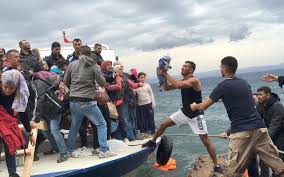
The worldwide refugee crisis threatens peace, civility, national prosperity and the survival of people fleeing the ravages of war, famine and political oppression.  The number of forcibly displaced people worldwide reached almost 60 million at the end of 2014, the highest number in the past 70 years. This egress, particularly related to war, is a humanitarian tragedy. In the last two years, 15 million people fled Syria and Iraq; 1.1 million people have been displaced in Yemen; more than 500,000 have fled South Sudan; 190,000 in Burundi; and 300,000 in Libya. (Aiyer 2016) As persons desperately apply for asylum outside their home country, their goal is to obtain refugee status which affords them legal protections and guaranteed resources.  The UN charter for host nations, established by the United Nations Refugee Agency (UNRA) was ratified into law in 1951. Modifications in 1967 established protocols defining a refugee as someone crossing an international border “owing to a well-founded fear of being persecuted for reasons of race, religion, nationality, membership of a particular social group or political opinion.” (Gibney 2004; Ott 2011; UN 1951) These international laws addressing asylum offered by a host nation come at significant economic demands and cultural challenges for the receiving states.  The savior nation has the mandate for both protection and durable solutions for displaced individuals. (Gray 2001)  Implicit in this obligation is consideration of these refugees with natural laws, owing that every individual must be respected with basic human rights. One states failure to protect their citizens results in a secondary state rising to offer sanctuary, respecting these inalienable rights with their dedicated responsibility. (Betts 2009; Gibney 2004) The massive and acute movement of displaced persons causes host countries to pursue expedient and fluid solutions to accommodate these refugees while demands from their own citizens require they ensure domestic security, economic stability and social tranquility.

The humanitarian response

The outcry from nongovernmental organizations, religious groups and world citizens often drowns out government ambivalence and demands consideration of oppressed people. Internationally, the United Nations refugee agency (UNHCR) acting cooperatively with agencies in host nations, provide structure and guidance for assimilation and integrating these displaced people.  Most accepting nations including the EU and the United States (US), adopt these recommendations and mandates for processing, protecting and accommodating refugees. Refugee protection through resettlement and access to a social welfare support systems becomes the cornerstone of this international obligation. In each country refugee resettlement collaboratives exist to provide cultural amalgamation and adaptation, assisting some 60,000 to 90,000 persons per year in the US alone. Here, the refugee must navigate through the maze of Homeland Security and the State Department before the Office of Refugee Resettlement (ORR) in the U.S. Department of Health and Human Services. This agency is responsible for providing resettled refugees longer-term assistance, language education and social services that focus on early employment and self-sufficiency. (Nezer 2013)  Nevertheless, despite its noble assignment, both the US and overburdened EU programs are chronically underfunded and failing to meet refugee needs. In addition, the policies are rigid and do not address divergent health and socioeconomic factors specific to certain refugee groups. (Nezer 2013)  Many refugees require extended services in medical and psychological care, intensive local language training, and repetitive assistance at finding employment. (Ott 2011) Equally tragic is that some refugee groups have highly educated individuals with professional experience, but the prolonged pathway to US recertification makes their professional experience obsolete. (Abramowitz 2009) Common conflicts result from failed expectations and lack of participation between community members, stakeholders, and resettlement authorities.

We read daily about the surge of asylum seekers taxing countries throughout the EU. These sovereign economies are beyond capacity to respond to the humanitarian challenge, process asylum requests, and prepare for the integration of those accepted into their labor market. (Aiyer 2016)   Security, political, and social challenges are overwhelming. From the 12 million people in the Middle East demanding immediate refuge and asylum, to the several African nations in turmoil forcing hundreds of thousands of people to flee, access nations are choking from the burden.  Throughout Europe the doors are closing to displaced people, foreshadowing misery and even genocide at staggering numbers.  The moral gesture of benevolent aid is so strained that conflict within the communities receiving refugees is inevitable and aggressive dispute resolution strategies must address these issues with premeditative planning.
Concepts of assimilation and integration

The distinction between assimilation and integration into a new society should be differentiated. Assimilation occurs when the group dissolves into the dominant society, while integration denotes interaction with the dominant society while maintaining one’s own cultural distinct identity. Resettlement is a complex issue designed to meet superordinate goals like economic prosperity, cultural integration, and refugee well-being.  Unfortunately, current agencies are unable to prevent or defend the refugee from racism, prejudice and financial strain, focusing on immediate relocation and substantive immediate survival requirements instead of long term strategies for peaceful co-existence in their new communities.  (Gray 2001). Refugees should not be coerced to choose between successes in a new society by abandoning their cultural identity. Instead of measuring successful integration by assimilation, Rodríguez-García proposes a new model of refugee resettlement and cultural acclimatization which “reconciles cultural diversity with social justice and political equality.” (Rodríguez-Garcia, 2015) Globalization might physically mix cultures, but globalized cities are more polarized in terms of race, with cultural clashes segregating native from refugee populations throughout Europe and America. (Rodríguez-García, 2015)  The opportunity to integrate into a society and blend cultures while protecting ones identity is precarious for both recipient population and displaced refugee.  A 1997 UNHCR report on the integration of resettled refugees noted that the constraints to resettlement included lack of employment, racism, discrimination, delays in family reunification, inability to speak the local language, lack of recognition of qualifications and experience and inadequately resourced integration programs. (Chitkara 2015; Gray 2001)

Kunz argues that refugees’ orientation to their country of origin has a significant impact on resettlement. He identifies three different groups: First, ‘majority-identified’ refugees who identify with their nation but not with its government; second, ‘events-alienated’ refugees, which may include religious or racial minorities, with no intention to return to their home; and third, ‘self-alienated’ refugees, who no longer wish to identify with their nation. Refugee groups may also be ‘reactive fate-groups’ or ‘purpose groups’ depending on their attitude to displacement. Reactive fate-groups are typically made up of majority identified and events-alienated refugees fleeing from war or revolutionary change. (Kunz 1981) Although most groups assimilate into the host culture, many maintaining their own culture in duality, the majority-identified reactive fate-groups who still identify fiercely with their own countries tend to integrate poorly, form political groups, and demonstrate the highest risk of negative interaction with the host society. (Gray 2001)

Refugees are in a power submissive situation that creates conflicts intrinsic to feelings of victimization once the luster of resettlement has waned.  As Roy (2008) discussed, power dynamics are seen in cultural and structural interactions when dealing with the integration into different cultures.  Conflict is inevitable. Since power is identified as a process evolving and influencing people through a multilayered and fluid set of relationships, this power will be formed and manipulated by the social structures within which the native population with the resources have power-over the newly arrived refugee.  Roy asserts that power is embodied in cultural practices causing influence through organizational roles and cultural structure. For a host population exerting power over relocated foreigners, the power differential may lead to significant conflict.

The challenge of accepting refugees

A 2010 US Senate report charged that “resettlement efforts in many US cities are underfunded, overstretched, and failing to meet the basic needs of the refugee populations” and highlighted the significant issue of secondary migration, or refugees relocating from their initial location in the US. (Ott 2011)  The office of Refugee Resettlement (ORR) is tasked with providing refugees with critical resources to assist them in becoming integrated members of American society, but the funding, grants and assistance are calculated and dispersed at the initial entry points and do not follow the refugees that migrate within the US. People move primarily for family and jobs but the internal relocation creates greater demand for services with less resources. (Ott 2011)   Cultural assimilation emerges as one of the most complex issues related to resettlement. Morgan argues that prioritizing assimilation leads to a “de-ethnicization challenge” (Morgan, 2015.). As an alternative, he suggests that settlement agencies should focus on finding solutions that ensure refugees retain their own culture while still becoming part of a new community. In addition, functional integration includes participation and contributions to the host social, cultural and economic life through employment and education. Collaborative agencies must match opportunities with refugee skills while providing adequate universal healthcare for physical, psychological, and spiritual wellbeing. The core unit of support, the family, must be reunited. Cultural exchange will introduce bicultural enrichment.  Governments can no longer shoulder the economic responsibility of this humanitarian mandate so these goals are now achieved through public-private partnerships between state run agencies and NGO philanthropic organizations, religious groups and municipalities.

Conflict in the refugee population

Global research demonstrates a positive economic impact on local communities expanded by influx of refugee populations, but community relationships can be threatened through cultural misunderstandings and discrimination, especially when refugees appear to be benefitting from social welfare and job creation disproportionately to the local citizen. (Guerin 2007; Ott 2011; Ager 2008) The strained relationship creates an atmosphere of tension and distrust. Unfortunately, conflict within and against the refugee culture does result in ethno civic rejection and upheaval through bias, xenophobia, political backlash and ultimately violence. The foreign culture becomes the target of anger and vehemence.   As Galtung notes, (Galtung 1990) ‘Cultural violence’ is used to legitimize oppression in its direct and structural forms. Threats and perceptions of compromised safety by the refugees leads to misery, morbidity, loss of identity and purpose through alienation and perceived limited freedom. Violence is needs-deprivation causing hopelessness, a deprivation/frustration syndrome that causes apathy, withdrawal and in some, outward aggression and civil unrest. (Galtung 1990)

Racism and discrimination are pervasive based primarily on ethnicity, culture and religious affiliations. Refugee exposure to repetitive physical and psychological trauma creates medical challenges, particularly in mental health care and healthy living choices.  This in turn effects employment productivity and peaceful coexistence within and outside their communities. (Chitkara 2015). Paradies (2015) defines racism as an “organized systems within societies that cause avoidable and unfair inequalities in power, resources, capacities and opportunities across racial or ethnic groups.”  Racism manifest in several ways, including aggression, stereotypes, and discrimination. Refugees report inequality in the job market as well as racist slurs in the streets and damage to personal property.

Refugees arriving in their new country experience an initial period of excitement and enthusiasm, followed frequently by feelings of survivor’s guilt and displacement anxiety. This distress may result in prolonged sadness, despondency and depression.  Additional threats from racism and discrimination only worsen this condition. The flames of discontent and barriers to resettlement create conflict within the community between refugees and with locals. Without a strong ethnic support community, maintaining traditional social and familial practices is impossible as refugees attempt to balance the need for integration with the desire to maintain their cultural integrity. Some groups of refugees are unable to establish strong and united ethnic communities because “old political allegiances continue to influence and divide refugee communities.” (Gray 2001)

In both EU countries and the US, economic downturns and higher unemployment rates cause serious regional budget shortfalls.  One effect is a rise in anti-immigrant laws across this country with challenges from many communities to refugee relocations because of additional taxation to finance resettlement.  There are statewide legislative and executive efforts to restrict and deter refugee resettlement. This anti-refugee sentiment has emboldened local officials looking to target refugee resettlement with anti-immigrant legislation. (Nezer 2013; NIJC 2012)  New refugees are openly opposed. People are resentful when scarce resources supplemented through federal funding defer medical, education, housing, and transportation needs to the refugees over the local population.  In particular in the US, rural communities now see a rise in relocation of entire cultural groups of refugees.  In these smaller communities the visibly different cultural, racial, and religiously affiliations in previous homogeneous communities breeds incidents of racism and prejudice.( Gray 2001) People in the host country might also misinterpret factors driving refugee relocation misattributing the displaced people as having ‘chosen’ to move, exploiting better economic opportunities in the host country at the expense of the native population. The concern about newcomers and their impact on a community’s established way of life is heightened now that many refugees resettled today are Muslims. Valtonen (1998) points to racist attitudes against Muslims as the predominant factor hindering successful social interaction within receiving society. The few cases of refugees connected to terrorism creates a nationalistic xenophobia that generates support for anti-immigration and anti-refugee assistance even from political moderates. Women in particular deal with prejudice and hostility resultant from restrictions on their dress and introverted social mannerisms, following the traditions of their own country, but stark behavior in their new melded cultures. (Grey 2001).

Potential solutions to conflict resolution

As Avruck and Black propose, ethno-conflict theory and associated conflict resolution techniques stress that cultural orientation must be critically considered to formulate models for successful dispute resolution. (Avruck 1991) Group identity through cultural awareness is secondary only to food and shelter for humans to find meaning in their lives and threats to this cultural harmony stress the fabric of existence for any sub group in society. Avruck stresses that the cross-cultural perspective on conflict management requires local practical understanding and traditional methodology of dispute management. These techniques and practices (ethno-praxis) in refugee populations will likely be different and possibly adverse to the local methods traditionally used to address conflict situations.

Research demonstrates that refugees are empowered through early employment and become active, contributing participants in their communities when ethnic support and family stability is available. (Ott 2011) In the US, the 1980 Refugee Act requires “available sufficient resources for employment training and placement in order to achieve economic self-sufficiency among refugees as quickly as possible” in order to maintain the diversity of cultural expression during integration, the concepts of acculturation are supported. (Kenny 2011)  Individuals embrace and participate in the dominate culture without divorcing or suppressing their own unique social heritage and traditions. When host communities understand the benefits of the cultural diversity, express humanistic acceptance of different perspectives and support ethnically diverse integration that modifies the status quo, the refugees report a welcoming environment where they feel less alienated and adopt a morphogenic diverse new cultural narratives as their own. (Berry 1997)

Local policies demand integration with refugee leaders collaborating to establish functional groups for successful co-existence that enriches both refugee and local civic objectives. The multitude of additional agencies, such as trades unions, not-for profit enterprises, and employers might complement and support immigrant integration and minimize prejudicial rejection and intended alienation. Finally, a number of current refugee /host partnerships stimulate independence by supporting immigrant entrepreneurship. (Bruno 2011). Establishing culture specific immigrant associations provide the first line of access to successful transition, access to economic opportunities, social support services and psychosocial support designed to resolve the fears inherent in relocation. Factually, evidence shows that refugees often stimulate economic development by increasing the tax base, starting new businesses, revitalizing neighborhoods, filling labor shortages, attracting investment from overseas, renting apartments, patronizing local businesses, and bringing federal funds directed toward schools and other public programs to local communities. (Elliott 1997)
Nezer (2013) has a series of recommendations designed to preemptively anticipate conflict and prepare for seamless integration, respecting autonomy but stimulating ethnic integration through collaborative systems design. Specifically, she calls for resettlement agencies to launch a funded, proactive organizing initiative, coordinated nationally but strongly rooted in local action, to raise awareness in communities about the benefits of resettlement and proactively prevent resettlement backlash. Nezer demands a quick response plan to address emerging anti-resettlement activity while generating a new “buzz” and talking points that discuss the humanitarian goals of resettlement and historical role of the US in protecting these needy souls.  She believes that the most successful plans to integration require partnering with immigrant advocates who ensure collaboration on advocacy in areas of stress or conflict. Given the economic resources allocated each year on refugee relocation, a dramatically improved federal tracking system that measures and reports success must be made transparent for the host country citizens to understand and accept the benefits of cultural diversity and refugee assimilation. Ultimately, the systems in place that are successful must be replicated globally to ensure efficiency and successful refugee relocation programs are celebrated and reproduced.

In Conclusion, the role of the ADR professional.

Refugee insertion into unprepared communities defensive about shared resources creates a critical access point in which expertise in dispute resolution structure and application will have effective impact and create lasting peaceful co-existence.  Critical pathways designed to proactively address refugee physical, mental and spiritual needs, orchestrated with collaborative efforts by recipient community stakeholders working together with refugee advocates and leaders, provides prospects for transformational cultural exchange. As Beth Roy points out, we need to be willing and able to engage without judgment about both “intentions and consequences of cultural styles, as we see them occurring in the room, in the context of people’s historical and cultural experiences in the world.” As such, we have the unique perspective to separate ourselves from the dynamic of conflict utilizing the skills and motivation to empower foreign people while demanding justice and equity. The ADR professional can be a powerful agent for change, challenging inequality and taking on the creative process of “rebuilding relationships as exercises in justice”. (Roy 2008).
Conflict resolution experts subserve multiculturalism, stressing tolerance to variables such as race, gender, class, age, sexual orientation, religion, physical ability, and language. Facilitating transformational enlightened perspectives regarding diversity through cultural awareness and sensitivity adds to the collective consciousness and enriches the lives of all those willing to repress fear and vulnerability while embracing displaced victims of natural or geo-political dislocation. (Loode 2011) Dialogue between participants stimulates shared ideas and experiences which might convert prevailing wary discrimination and even subliminal prejudice. (Banathy 2005.) Dialogue encourages participants to examine and share “preconceptions, prejudices, and the characteristic patterns that lie behind their thoughts, opinions, beliefs, feelings, and roles” (Bohm 1991). ADR professionals are uniquely qualified to combat modern racism through systems design in communities integrating refugees. Focusing on trust building while moving beyond a calculus based cautious hand of minimal assistance to a knowledge based trusting co-dependence where bias, prejudice and faulty attributions errors steeped with animosity no longer imprisons ignorant minds. Through advocacy, facilitation and mediation of anticipated and evolving conflict, the ADR professional might follow LeBaron’s (2003) advice using dialogue “to understand the influence of existing cultures and the differences that distinguish them without letting a particular culture or cultures dominate the discourse.”  By providing insight into both refugee and host citizens values, logic, and stories both people will realize that despite language and customs differences, their interests and core needs are often closely aligned, effectively bridging intercultural conflicts through awareness, acceptance and mutual respect.


Works Cited.

  1. Abramowitz, M et al. Iraqi Refugees in the United States: In Dire Straits, June 2009, International Rescue Committee report. New York, NY 10168 | theIRC.org
  2. Ager, A. and Strang, A. (2008) ‘Understanding Integration: A Conceptual Framework’, Journal of Refugee Studies, 21(2): 166-187.
  3. Aiyer, S, Barkbu, B et al. (2016) The Refugee Surge in Europe: Economic Challenges. IMF publication. Feb 2016.
  4. Avruch, Kevin (Jan 2016). Culture and Conflict Resolution United States Institute of Peace. (Kindle Locations 493-496).
  5. Avruck, K and Black, P. (Jan 1991) The Culture Question and Conflict Resolution. Peace and Change. Vol 16 (1) pp 22-45
  6. Banathy, B. H., and Jenlink, P. M. (2005) Dialogue as a Means of Collective Communication. New York: Kluwer Academic/Plenum, 2005. Pp 39-43
  7. Betts, A. and Kaytaz, E. (2009) ‘National and International Responses to the Zimbabwean Exodus’, New Issues in Refugee Research, UNHCR paper 175, July
  8. Berry, J. (1997) ‘Immigration, Acculturation, and Adaptation’, Applied Psychology: An International Review 46(1): 5-68.
  9. Bruno, Andorra. (2011) U.S. Refugee Resettlement Assistance. Congressional Research Service, CRS report for congress. January 2011.
  10. Chitkara, Hirsh, Gao, Yilin et al. (2015) American Resettlement Agencies and Their Effectiveness in Helping Middle Eastern Immigrants and Refugees Navigate Social and Financial Challenges. Office of Refugee Resettlement Annual Report to Congress. U.S. Department of Health and Human Services, 11 June 2015
  11. Elliott, Samuel. (1997). ‘Like Falling Out of the Sky’: Communities in Collision. In C. Bell Ed. Community Issues in New Zealand. Palmerston North: Dunmore Press Ltd
  12. Galtung, J. (1990) Cultural Violence. Journal of Peace Research, vol. 27, no. 3, 1990, pp. 291-305.
  13. Gibney, M. (2004) (7) The Ethics and Politics of Asylum, Cambridge Press 2004
  14. Gray, A and Elliott, S. (2001) Refugee Resettlement Research Project ‘Refugee Voices. New Zealand Immigration Service. Dept. of Labor. May 2001
  15. Guerin, P. and Guerin, B. (2007) ‘Research with refugee communities: Going around in circles with methodology’, The Australian Community Psychologist. Vol. 19(1)
  16. Kenny, P. (2011) ‘A Mixed Blessing: Karen Resettlement to the United States’, Journal of Refugee Studies 24(2)
  17. Kunz, E. F. (1981). Exile and Resettlement: Refugee Theory. International Migration Review, 15(142)-51
  18. LeBaron, M. (2003) Bridging Cultural Conflicts: A New Approach for a Changing World. San Francisco: Jossey-Bass, 2003.pp 269-271.
  19. Loode, S. (2011) Navigating the Unchartered Waters of Cross-Cultural Conflict Resolution Education. CONFLICT RESOLUTION QUARTERLY, vol. 29 (1)
  20. Morgan, John H. (2014) Islam and Assimilation in the West: Religious and Cultural Ingredients in American Muslim Experience. Journal of Religion & Society 16 (2014):
  21. Nezer, Melanie.(2013) Resettlement at Risk: Meeting Emerging Challenges to Refugee Resettlement in Local Communities. JM Kaplan. Feb 2013.
  22. (2012) No Victory for Arizona: Supreme Court Strikes Down Most of SB 1070 Immigration Law, Punts on “Papers Please” Provision, Immigrant Justice, June 25, 2012. http://www.immigrantjustice.org/press_releases/SupremeCourtSB1070ruling.
  23. Ott, E (2011). Get up and go: refugee resettlement and secondary migration in the USA. Oxford press. Division of International Protection UNHCR, Geneva. Sept 2011.
  24. Paradies, Yin et al. (2015) Racism as a Determinant of Health: A Systematic Review and Meta-Analysis.” PLoS ONE 10.9 (2015)
  25. Rodríguez García, Dan. (2010) Beyond Assimilation and Multiculturalism: A Critical Review of the Debate on Managing Diversity. Journal of International Migration and Integration 11.3
  26. Roy, B. (2008) Power, Culture, Conflict. In Re-Centering Culture and Knowledge in Conflict resolution Practice. Syracuse University Press. 2008. pp 179-194
  27. UNITED NATIONS (1951) United Nations Treaty Collection Convention relating to the Status of Refugees, Geneva 28 July 1951.
  28. Valtonen, K. (1998). Resettlement of Middle Eastern Refugees in Finland: The Elusiveness of Integration. Journal of Refugee Studies, 11(1), 39-60.


Advocating for Evaluative Mediation for productive medical liability dispute resolution.

Advocating for Evaluative Mediation for productive  medical liability dispute resolution.

Although this treatise will reflect my bias, if not prejudice on effective mediation techniques, it is not my intention to represent strict adherence to one mode or method of conflict engagement, discounting significant benefits of a multi-modality approach required by the competent ADR professional. In fact, regardless of which style a practitioner adopts, each method should be strategically and tactically deployed under the auspices of a capable mediation practice. To concentrate one’s practice, on-going continuing medical education and limit one’s skill set, even when our comfort zone demonstrates a proclivity toward one style of mediation, is to compromise our own necessary academic pursuits.  This results in an inferior professional skill set when we offer our services as dispute resolution specialists.

Handshake and agreement
Happy Couple Shaking Hand With trusted physician mediator

Reflective insight, active listening, and creative engagement ensures that the disputants receive the superior services of a mediator with depth and breadth of skills to remain flexible and adaptive, providing elements of transformative, facilitative, and possibly narrative mediation techniques even when the concentration of efforts could be categorized as “evaluative methodology” from a subject matter expert.

First, a brief synopsis of transformative and narrative mediation methodology. Both techniques assume that the fundamental relationship between disputing parties holds a relevant history and value to the opponents as one superordinate goal of mediation process, to maintain a relationship going forward(2,3,5,9,10). In fact, the benefits of both techniques, supervised by a third-party intermediary, might improve the relationships by primarily exposing and dispelling bias, attribution errors, and unresolved issues that tainted the association and contributed to the current conflict(2,3) HCMP team 2The transformative approach to mediation focuses on the empowerment and mutual recognition of the worth in the individual and their opponent, rather than resolution of the immediate problem.(2,3) Transformative mediators say that power and responsibility are the issues in a conflict, not settlement or compromise(2). Transformative Mediation focuses on empowering the relationship between people rather than simply the individuals themselves (as apart from any relationship)(3). “Empowerment, according to Bush & Folger, means that the parties define their own issues and seek solutions on their own.” Empowerment does not mean power-balancing or redistribution, but rather, “increasing the skills of both sides to make better decisions for themselves”(2) and for the “restoration to individuals of a sense of their own value and strength and their own capacity to handle life’s problems.”(2,3) The mediator’s goals emphasize a mutually agreeable solution, but that is subjugated to enabling opponents to approach their current problem and potentially future problems with greater insight and empathy for the value in the relationship and perspective of their opponent. Thus the rapport focused experience presumes that an enhanced relationship with positive intent toward one’s opponent will result in tolerance and acceptance of their goals and interests and provide rich supportive context to future negotiation by trusting and valuing the affiliation (2,3) Based upon my understanding of trust building, transformative mediators seek to create an identification-based trust (IBT) between opponents, and that “trust at this advanced stage is also enhanced by a strong emotional bond between the parties, based on a sense of shared goals and values.” (4).
Narrative Mediation differs fundamentally from transformative mediation and critically from evaluative mediation by altering the relational and emotional negative attribution one party has toward the other (5,9,10). The narrative model does not focus on problem oriented results or settlement. These are secondary benefits resulting from the parties altered storyline following revelation and perceptions facilitated by the mediator shepherding opponents through discovery of critical interests, experiences, and bias that formulate their perception of reality. Narrative mediation is grounded in the theory of social constructionism(1), which proposes that people are the “products of social processes” and that “much of what we know is hardwired into our psyches by the social and cultural world around us” (1,10). Opponents are influenced and manipulated by the conversations they experience that create opposing story-lines by different interpretation of truths and facts and non- synergistic interpretation results in dispute. Narrative mediation views conflict from the Winslade & Monk (9,10) characteristic that “there is no single definable reality, but a great diversity in the ways we make meanings in our lives”. 4446563_s-300x300Thus, narrative mediation views conflict’s arising because parties misinterpret the truth and facts about any situation. Since our individual perspective might be as unique as our DNA, conflict is viewed as the almost inevitable byproduct of diversity, rather than as the result of the expression of personal needs or interests (10). Therefore, in narrative mediation, the mediator’s job is to alter the opponents’ perspective by gaining insight into the dispute and discovering alternative story lines that will isolate a dispute from the long term relationship that was positive and mutually beneficial (5,9,10). In summary, narrative mediation does not search for one true story, but welcomes competing story-lines and alternative story conclusions by deconstructing the current conflict and re-framing the perspective of both opponents for an integrative conflict understanding and possible conclusion (5,9,10).
My personal orientation provides evaluative and directive mediation model to the medical practice and healthcare litigation disputes I am hired to mediate. The effective utilization of evaluative techniques complement my experience and skill set in healthcare delivery. Perhaps this is inevitable given my scientific and didactic approach to information, nature and the human psyche but this would be a superficial conclusion based upon my life’s work. As a consultant and subject matter expert, despite a conflict specialist’s fervent desire to explore the psycho-social issues that create conflict, I am convinced that most parties are seeking advice and resolution if they agree to private dispute mediation(2,6,8). Successful mediation must respect the goals of our clients which create the ethical mandate when contracting our services. Application of these techniques in healthcare medical liability dispute resolution favors the evaluative approach. The evaluative goals of problem-solving mediation concentrating on a mutually acceptable settlement of the dispute will require directing the investigative substance of the discussion, de-escalating the conflict through advisory consultation and controlling the step-wise process to determine if consensus and settlement is possible (2,8). As a physician utilizing the evaluative model of mediation, I am a nonclinical provider helping to understand and negotiate disputes within the healthcare system while supplanting my clinical orientation with an intermediary’s impartiality focusing on the likelihood of issue resolution in a fair and considerate agreement. med mal 2

My research on the evaluative mediation model quotes Leonard Riskin’s (7) introduction of the terminology of “evaluative mediation” as distinct from “facilitative mediation”. The key features are that the mediator was to: urge/push parties to accept settlement; develop and propose the basis for settlement; predict how the court might decide the case; assess the strengths and weaknesses of each side’s case; and educate each party about their own interests. Thus in evaluative mediation, the mediator focuses on the parties legal rights with a problem oriented, solutions based advocacy which might persuade the parties to reach a settlement conclusion (6,7,8). The mediator structures the process and directly influences the outcome through education. It was Riskin himself who questioned if his “evaluative mediation” was mediation at all (7). In rebuttal, Stulberg wrote “only the mediator who adopts a suitably … facilitative orientation is in a position to ground an approach to problem solving…”, essentially implying that facilitative mediation and all mediations require evaluative methods, and in practice, it is a mute argument since evaluative methods, when properly analyzed, are indistinguishable from facilitative methods (3,8). As an evaluative mediator I am always enthusiastic toward the analytical sequencing and conference with disputants, encouraging negotiation, collecting alleged facts, evidence and arguments, and providing information, opinion and advice which is altered in tone, timing and content based upon the emotional and cognitive positional demands from either party. In my example of application of this technique, medical malpractice litigation, both parties have “substantive opinions” introduced from “dueling experts”. As an evaluative mediator, I am a process facilitator to the mediation, and have the potential to provide compelling advice to both parties based upon the theme of the dispute. In reality, it is rare that the parties involved in medical malpractice litigation have any desire to maintain a relationship after claims are made and defenses rendered. Thus, an evaluative process concentrating on conclusion benefits of alternative dispute resolution over adjudicative litigation likely meet the expectation of both parties in conflict.

My mediation orientation as a medical expert provides a balanced approach to medical legal cases. The crux of the dispute is propaganda advocated from paid expert witnesses to challenge or support previous care provided to a plaintiff. The cases hinge on the “expert” paid for by the plaintiff or defense but the concepts of standards of care, critical to allegations of errors of omission or commission are often nebulous.schneider My role as an ADR specialist provides a reflective approach to evaluative mediation.  Cases are sought out by physicians wanting to ensure they have adequate neutral subject matter experts participating in the closed door caucus where a plaintiff is often over enthusiastic about the chances of a successful litigation.  In the same vein, my expertise is sought by lawyers, hospitals and courts in order to provide the same balanced perspective to these processes and not just a legal bantering seen too often between lawyers and mediators with strictly legal back grounds.  I confirm my non- bias impartiality by reminding the medical personnel that an egregious error, if compellingly argued by plaintiff’s experts, will be equally considered when making my recommendations and/or looking for solutions that require a third party intermediary.  In fact, my role for years on medical boards and medical staff demanded harsh critical analysis of healthcare mistakes through the peer review process. I have witnessed the effect of inadequate regulations and the spectrum of mediocre care.

With the maturation of the information age, patients are savvy consumers before and after treatment and challenging suboptimal and poor outcomes much more aggressively. With the glut of legal counsel available, disgruntled patients file claims, complain to medical boards, and with the prolonged process of litigation, the more entrenched they become in the victim’s role. As an evaluative mediator I examine the core medicine practiced relative to the plaintiff’s co- morbid medical issues and provide perspective on the likelihood of a strong plaintiff or defense argument. Hopefully in the third party position, I will truly understand through caucus communication if that plaintiff, as a patient, understood the risks and expectations of the care received as it is the providers responsibility that his/her former patient understood these issues.

Contrasting the advantages and disadvantages of evaluative mediation, the benefits allows party interview which is not encumbered by discovery rules of alleged facts, evidence, and settlement ranges, which have not been disclosed as a litigation tactic (6,7). As a third-party neutral and subject matter expert, I might provide a fresh insight into how an outsider, such as a jury, would view aspects of the dispute when paid experts are advocating for opposite conclusion. That role as a subject matter expert should give credence to advice regarding negotiation ranges and settlement and provide justification for plaintiffs, healthcare providers and insurance company representatives to utilize alternative dispute resolution to conclude the claim. Alternatively, the disadvantages of evaluative mediation include the dismissal of potential repaired relationships and devaluing emotional and psychological catharsis found in the deeper psychoanalytical approaches to conflict resolution (2,3,4,5,6,8). It is highly probable that a successful monetary settlement will do anything to heal the wounds of distrust and even malevolence rendered between parties (4). The human psyche may be forever damaged with a default cynicism in their worldview outlook following these proceedings. It is imperative that both plaintiff and defendant are allowed the opportunities for catharsis, empathy and peace building even if the focus is on a distributed demand encouraged by representative lawyers focused on economic gain.cropped-medical1-e1450413022194.jpg A quote from Craig Pollock (6) coins my interests “..one well known mediator, the late David Shapiro, was known to argue that the major difficulty he encountered with party representatives was their tendency to “fall in love with their own case” and the job of the evaluative mediator was to break up the love affair.” All too often I have witnessed emotion and dispositional demands flamed by a malevolent legal representative that prevents the interests, needs and ultimate psychologically stabilizing conclusion to a dispute. As a physician, I believe my focus on healing the effects of the human condition and temperament provides a welcome alternative to the legal authorities that dominate these alternative dispute resolution roles (6).


  1. Bush, R., & Folger, J. (1994). The Promise of Mediation. San Francisco: Jossey-Bass.
  2. Burr, V. (1995). An Introduction to Social Constructionism. London: Routledge.
  3. Folger & Bush, 1994. The Promise of Mediation: Responding to Conflict Through Empowerment and Recognition (The Jossey-Bass Conflict Resolution Series). 1994, Jossey-Bass.
  4. Kelly, T. L. (1999). “A Critical Analysis of the Transformative Model of Mediation.” Portland State University, April 1999. Portland, OR.
  5. Lewicki, Roy J. and Carolyn Wiethoff. “Trust, Trust Development and Trust Repair.” In The Handbook of Conflict Resolution: Theory and Practice. Edited by Deutsch, Morton and Peter T. Coleman, eds. San Francisco: Jossey-Bass Publishers, 2000.
  6. Millard, Ryan J. “Narrative Mediation in Protracted International Conflict: Transcending the relational and emotional hurdles to resolution in inter-group conflicts” University of Oregon.2005
  7. Pollack, Craig. Evaluative mediation and some of the considerations in deciding whether to agree to it by November 27, 2012. http://www.jamsinternational.com/adr/evaluative-mediation-and-some-of-the-considerations-in-deciding-whether-to-agree-to-it.
  8. Riskin, Leonard L. Understanding Mediator’s Orientations, Strategies and Technique; A guide for the perplexed. Harvard Negotiation Law Review Vol 1:7, p7
  9. Wade, John, “Evaluative and directive mediation: All mediators give advice” (2012). Law Faculty Publications. Paper 427. http://epublications.bond.edu.au/law_pubs/427
  10. Winslade, J., Monk, G., & Cotter, A. (1998). A Narrative Approach to the Practice of Mediation. Negotiation Journal, 14(1), 21-41.
  11. Winslade, J., & Monk, G. (2001). Narrative Mediation: A new approach to conflict resolution. San Francisco: Jossey-Bass.