Core conflict and Identity Revelation

Core conflict and Identity Revelation

An Essay reviewing the film Tin Man by Barry Levinson

The movie Tin Men (1) by Barry Levinson provided endless opportunities to analyze conflict behavior between disputing parties.  I chose the scene at the social security office in which Bill Babowsky (“BB”) is determined to break up Nora after they establish a relationship.  BB shows up at her work place intent on ending the affair but concludes on a passionate kiss and a stronger bond between BB and Nora after this difficult conversation (4).  I concluded that this scene is the most significant conversation in this movie. The scene is predicated on BB wrestling with his emotions and core values because of a new found attraction to Nora. The petty argument over trite behavior characteristics personifies his emotional and psychological turmoil with this woman who at first was a tool in his scorn, meant only to escalate BB’s conflict with Tilly.  As BB develops strong emotions toward Nora, we see BB’s psychological and emotional transition throughout the movie. By acknowledging his passion for Nora, occurring in this scene, the conversation (3,4) becomes the catalyst for his introspection and core value shift (2,3). Nora is no longer an asset as Tilly’s wife, to fight with Tilly. BB’s priority becomes resolution of the conflict with Tilly in order to protect his core value shift and the relevance of Nora in his life. Therefore this scene demonstrates conflict resolution (2) between the two BB’s that struggle to embrace the world and the negotiation with Nora changes BB’s emotional and cognitive commitment to the on-going conflict with Tilly.  BB fundamentally pivots around the value he places on Nora.  This movie’s (1) central theme is about BB’s internal conflict and the cognitive dissonance (2) created by his past life’s priorities which contrast with his new found emotion for Nora.  We see BB transition from a narcissistic, egocentric self-absorbed con-man with a core shift in fundamental interests and needs. The conversation, negotiation and outcome specific to this scene demonstrates Nora’s effective conversational and negotiation skills which enable BB to evolve (2,3,4).

As we apply academics and analyze the actual conversation in this scene we must recognize that BB’s argument with Nora is a manifestation of this personal transformation.  The conversation with Nora as conflict brings resolve and definitionally reframes (2,3,4) the entire battle with Tilly.  This scene inspires BB to move toward cognitive and emotional resolution (2,3). For BB the conflict is a “value-based conflict that is difficult to resolve and present an either-or choice (2)” and “such transformation is often essential if conflicts are to be effectively addressed and unless disputants understand both their own needs and those of others, a genuine resolution of conflict is not possible”(2). So the conflicted BB must address his underlying issues: values of lifestyle and behavior and values of job and status, all of which are challenged by the concept of a relationship with Nora. Affecting a resolution, evokes a fundamental self-realization – the desire to know love and be accepted for his true self. According to Stone, “If we deny that the emotions are there, then maybe we can avoid the consequences of feeling them”(3).  BB acknowledges is identify conflict with the conversation in this scene.

Sequestered behind a faux barrier, the conversation is critiqued on signals and devices, focusing on the communication loop (4,2) between BB and Nora. They have different styles, but engage with “very active and clear messages of connection during a communication, with head nodding, verbal assents, and intense eye contact”(4) In fact, they have a successful communication’s loop and avoid a communication breakdown. Tannen’s book (4) talks specifically about the contrasting styles seen in this scene: BB is raced, hurry and emphatic, whereas Nora is calm, fluid and normal pace without urgency or anxiety in her speech.  One must concede her angst, when moments before she spoke with her friend, thrilled that this relationship was joyful.  Her ability to field the bad news that BB delivered by her signals, cues and calming demeanor allowed her to shift the power in this conversation and encourage BB’s self-revelation. Nora masterfully uses pitch and intonation signals and devices to direct the conversation from a positional demand to a collaborative relationship plan. Her expressive reaction, asking questions, limiting complaining, and apologizing for any inconvenience she caused BB(4), in concert with her meta-messages (2,4) through her body language, tone of voice and display of engagement, frustration, appreciation, and confusion over BB’s break up message are quite visible. As Tannen points out, “how we speak those words—how loud, how fast, with what intonation and emphasis—communicates what we think”(4) BB’s meta message are obvious by his anxious, fast talking, and pacing, all indicating his struggle with indecision.  He believes he knows what he wants, anticipating a break up with Nora, just to regain his balance, but Nora style is so powerful, it shifts the ‘power-over’ her to a ‘power- over’ BB. The change is dramatic and underscores BB’s entire value shift in this movie (1).  This conversation is the first instance where BB relinquishes power and is the essence of the pivot that occurs in this movie, transitioning BB’s persona in order to meet the author’s desire to show that materialism and status while narcotic in their effect, are inferior to the value of relationship and family. Nora uses direct eye contact, repose, forgiving and complacent language, a willingness to adapt quickly to BB’s needs, as she leans forward into the conversation, showing intense interest in its outcome.  Nora speaks with respect and emotional attachment and therefore directly.  She controls the outcome of the conversation by negotiating away her behaviors that irritate BB.  She is direct in responding to his specific complaints but indirect in her capitulation knowing that the outcome of this conversation will establish the health of the relationship. Nora’s effective style with BB applies Ury’s techniques as “problem-solving questions enabled her to reframe her opponent’s position in terms of interests, options and standards”(5). She successfully “reframes an attack on you as an attack on the problem” (5) by reframing BB’s intended target of his frustration, Nora, on the petty behaviors themselves. Both parties rely on indirectness as “a self-defense mechanism”(4) as neither would want to acknowledge true behavior and emotion such as BB: “I am an egotist and narcissistic and this relationship is challenging my comfortable identity”; or Nora: “I am desperate to feel love and compassion which I just found and I don’t want to be alone, willing to suffer through a malignant relationship instead of being lonely.”

This conversation did not utilize complementary schismogenesis described by Bateson (4) as the behaviors moved from an extreme positional stance to a collaborative union of common interest.  Although the movie (1) is replete with examples of this behavior, this scene actually deescalates the conflict between Nora and BB, just as BB’s internal conflict begins to deescalate (2) and his true desires take control of his actions.  According to Mayer, the negotiation in this conversation quickly embraced an interest-based negotiation, where “people discuss their needs and concerns and look for options to address them.”(2). We can analyze the conversation by the “what happened conversation, the feelings conversation and the identity conversation” (3) What happened framed the conflict, but we should not be lulled into simply identifying BB as the angered dilatant demanding to control the relationship, but respect the ‘what happened’ as a difficult conversation (4) where BB was self-actualizing and resisting a shift away from his secure identity port.  What truly happened was he re-valued his interests and priorities, and the nuanced irritations of Nora’s behavior were quickly quashed as insignificant as BB came to resolution, accepting and justifying his new emotion, loving another, as profoundly valuable.  The feelings conversation and the identity conversation (3) are intermingled in this scene. By listening to BB’s concerns, listening to his trite irritations aloud, Nora allows BB to discover these as irrelevant complaints and embrace his true emotions. This disassociates the meaning behind the conflict and focus on his core interest and need (2), collaborating with her on a solution that answers a fundamental mutual desire; love and compassion for each other.  BB has a new essential value and identity which he fights for vigorously throughout the rest of the film.  He now protects that core need and interest with a longing to resolve peripheral conflicts that threaten its existence.

Therefore, this conversation in the social security office is the most profound moment of the film, where Nora reframes the values turmoil BB struggles with and allows him to experience and embrace resolution through behavioral and definitional reframing of their issues and his internal conflict (2,4,5).  What she accomplishes is a narrative reframing of BB’s view of their entire relationship and its significance changes the trajectory of his embattled stance with Tilly, the home inspection commission and his view on his life.  BB’s conversation follows Stones message on difficult conversations: “share the impact on you and inquire about their intentions”(3). Nora artfully and skillfully showed she had no mal-intent in her emotional conversation (3) and preserved her self-identity that was threatened by rejection from BB.  Nora’s desire to resolve the conflict and stay with BB is out of fear.  As Mayer (2) points out about fear and hope: “We often feel almost desperate to reach an agreement, not necessarily any agreement, but one that seems at least minimally adequate, to avoid what can feel like dangerous territory or uncharted waters” and “hope that an outcome will solve our problems, lead to a brighter future, and allow us to put an unpleasant or painful experience behind us.”  Where BB is accepting an identity shift through this conversation, Nora is preserving her identity as a good person that deserves love. BB and Nora care about “what each is saying which is the heart of good communication”. (2)

  1. Levinson, B. (Director). (1987). Tin men [Motion picture on DVD]. Paramount.
  2. Mayer, B. (2012). The Dynamics of Conflict: A Guide to Engagement and Intervention (2nd ed.). San Francisco, CA: Wiley and Sons.
  3. Stone, D., Patton, B., & Heen, S. (2010). Difficult Conversations: How to Discuss What Matters Most. New York, New York: Penguin Publishing Group.
  4. Tannen, D. (2013). That’s Not What I Meant!: How Conversational Style Makes or Breaks Relationships (1st ed.). New York, New York: FIRST HARPER Paperback.
  5. Ury, W. (1992). Getting past no: Negotiating with difficult people. London: Century Business.

Application of computer based logic design theory to model facilitator intervention in healthcare stakeholder negotiations.

Application of computer based logic design theory to model facilitator intervention in healthcare stakeholder negotiations.


Integrating modeling of logic based theorem applied to psychometric representations of group behavior designed to accomplish shared vision and goals, provides the independent third party professional facilitator with option matrix to determine the maximal benefit outcome for a pareto negotiated conclusion.  This paper reviews the application of logic argument design as it applies to classic modeling of group dynamic behavior coined by scholars promoting consistent successful contractual conclusions between dispositional entities in the healthcare service sector.


The design of proposed plan calls for facilitation management coordinated between physician leaders and their practice managers partnering in an accountable care organizations (ACO) with a major health insurance carrier regarding lives covered and services included in the ACO reimbursement model.

An ACO is group of doctors, hospitals, and other health care providers, who come together voluntarily to give coordinated high quality care to their Medicare patients.  Blue Cross Blue Shield is designated example of a market dominant third party payer, reimbursing the ACO for contractual services for fixed population of “covered lives”.  Both parties seek to maximize their economic gain for services rendered and both companies are for profit organizations. There are multiple intrinsic issues to discuss regarding reimbursement for services based upon the diagnosis of the patient and the services provided.  For simplicity, the discussion focuses on two sets of reimbursement codes, the ICDM-10 codes which describe a diagnosis and the E/M plus CPT codes which describe the services provided by the healthcare workers.  The negotiations are much more complex than just reimbursement and include additional services expected by BCBS but with little reimbursement, such as preventative and educational care programs, readmission or redundant care following complications or poor outcomes, and maintenance care for diseases that traditionally reimburse poorly to the healthcare providers, but consume considerable time and effort by the providers.  Lastly, there are desired “carve outs” by the healthcare providers for disease management that requires much more time, effort and risk than the current reimbursement structure allows.  For these cases, BCBS would have to cut into their profit margin and even transfer funds from non-Medicare federally funded programs to cover these additional expenses.

Our company, Efficient Healthcare Negotiators (EHN) prepares the template and orchestrates the structural paradigm by which our experts will facilitate stakeholder communication, pre-meeting caucus, intra-meeting group interaction and post meeting negotiations and follow through.  Concentration on common goals, topic discussions, contract negotiations, contract execution and the system tracking function necessary to ensure both the ACO and BCBS comply with the contract specifications, including reporting, error tracking and relationship management. Finally a grievance process will be agreed upon in which both parties will attend to the issues within a preset time frame, investigating resolution and if required, contacting EHN as an intermediary to mediate for dispute resolution.

Model Theory:

This proposed model identifies and invites key stakeholders and decision makers who must participate in this congress to accomplish the contractual tasks required to provide defined medical services and obtain reimbursement for those services.  Both groups are required to submit a brief description of their key personnel necessary to accomplish this task.  Those key persons are requested to submit a letter of intent to negotiate in good faith, participate actively in the activities leading to an acceptable contract and provide a goal statement for public consumption as a pre-meeting introduction of whom they are as participating members of this contracting convention.  Following Stahl’s Model of Collaborative Knowledge-Building (2), our structure in facilitation will be to explore “individual stakeholder perceptions and look at common goals” (2).  The facilitators mission allows for a formulation of a new reality in which both sides arrive at multiple collaborative agreements and the facilitator seeks to support the collective new definition of the relationship between parties as “the collective agreements” (2, 7, 8) which transition to the new socially created knowledge base as the definition of this relationship, accepting the terms of a negotiated agreement as truth. Thus according to Stahl, we are using “social learning models for consensus building when two or more parties claim a position” (2) based upon their desired dispositional perspective.  The discourse (7) and communication objective for the group negotiation is critical to helping multiple perspectives to converge on shared knowledge. The accumulation of negotiated shared knowledge results in the establishment of an accepted group perspective. (2)

EHN believes that a logic based computational model referencing game theory concepts for pareto agreements (1) between these multiple parties presents a unique model for the facilitator to reference and maximize areas of consensus between parties that will drive the Appreciative design model of dynamic collaborative group design and activity to arrive at a successful negotiation between disparate party positions.  According to Ragone (1), “it is possible to have many issues negotiated among many parties” however there will likely be hidden agendas because of “the interplay among shifting coalitions: parties can join and act against other parties involved” (1) Ragone applies the logic behind game theory where bargaining opportunities are defined as either a “cooperative or non-cooperative games” (12).” Theoretically, representatives of each negotiating group are “individually rational” (1,12) and unlikely to accept a deal which involves a loss, i.e., a disadvantageous deal. Practically however, the self-interested agents negotiate over a set of resources in order to obtain an optimal allocation of these resources while maximizing the concessions from their counterpart group (13).  As a facilitator, our model must use logic-based negotiation strategies to discover and delineate the space of possible deals or potential agreements; determine the set of rules and methodology this group will utilize through-out negotiations (the negotiation protocol), and supervise negotiation strategy each agent adopts, within the set of rules specified in the negotiation protocol.  The logic theory of maximal gain simultaneously achieved for optimal pareto negotiation results, dictates that when since several items are being negotiated simultaneously, an integrative conclusion allows each issue to assume a different utility or importance score and as collaborative agents defining a new reality of their relationship, cooperation that provides “more for one party” does not necessarily result in their opponent receiving “less”.(1,12,13)  These are critical ground rules the facilitator for a logic based system must communicate to the participants. Finally, based upon logic driven conclusions defining optimum solutions from each party, the facilitator should be able to proposes agreements mutually beneficial for both parties; an agreement which maximizes the social welfare and one which maximizes individual needs and interests by stakeholder requirements utilizing consensus opinion modeling for integrative contract solution.(1,12,13)
The Third Party Role

In our initial communication brochure to each party, and reiterated throughout our system design, we provide facilitator services, orchestrating a systematic approach to negotiation but not advocating for any one side. The third-party must be defined only as a facilitator, and avoid undo influence or power in the negotiation.(3,4,8,9) EHN recognizes that requests to influence the negotiation by executing an evaluative proposition subjects the neutral intent to functions of arbitration rather than facilitation or conflict mediation.  EHN will recuse itself from any decision making or evaluative influence over any “deal” despite EHN experience and subject matter expertise in these contracting issues.  All party stakeholders are reminded of our role in these negotiation to avoid confusion, bias or prejudice against EHN personnel assisting on this case.

This model mimics complex system software design that requires logic inferences based upon optimal outcomes defined by established positions.(1,2,4,5,6,) The group interaction specifically collaborative knowledge building environments consider learning as a social process incorporating “multiple distinguishable phases that constitute a cycle of personal and social knowledge-building.” (2) The theory, advocated by Gerry Stahl, allows us to replace the computer modeling interface with the facilitator role. The process suggests that the group will effectively manage increasingly complex questions during negotiations as their interaction secures a sophisticated understanding of each theirs needs and interests. This model of collaborative knowledge-building functions equivalent to the social learning model if discourse and communication is “relatively free of hidden agendas, power struggles and un-discussed prejudices.”(2,3,4,6,7,8) Without anticipation that the negotiation from positional perspectives will not result in acceptance of a consensus result, then this new accepted knowledge will be unsuccessful and the negotiations will fail. Logic theory states that failure will occur only when one or more party demands a set of circumstances that their opposite considers extreme and rejects compromise for mutual gain. (1,5)  In addition, this model formulates a communication paradigm that stimulates effective communication by facilitating and demonstrating social interaction skills such as turn-taking, repair of misunderstandings, rhetorical persuasion, and interactive arguing between collaborating parties.(5,7,8)  The knowledge based integrative design calls for support for positional perspectives but facilitates comparison perspectives, “in which one can view and contrast alternative perspectives and adopt or adapt ideas from other people’s perspectives.” (1,2,3,4,5) These comparison perspective aggregates ideas from positional opposite demands and provide the structure to contrast the merits and contentions of each opinion in the form of a discussion forum, an interactive communication dynamic system that allows people to consider and respond to alternative proposals.(2)


Collaborative Model Design

The proposition that negotiations directed to create institutional and structural acceptance of a co-dependent business relationship invites key stakeholders to the negotiating table to ascertain over-lapping positional interests that might stimulate concession and ultimately consensus across this multiparty cooperative endeavor.  According to Bryson (4), this model encourages “discourse to introduce both organizations to merge into a new entity to handle problems through their shared authority and capabilities”. Critical to the outcome are coordinated initiatives and shared-power in order to pool their resources and skills to address specific resource and functional needs.  Bryson makes several arguments on the facilitative conditions likely to encourage a successful negotiation environment in the form of propositions.  As an example he points out that stakeholders are subject to hidden pressures or stressors and that collaborators are subject to both “competitive and institutional pressures that significantly affect their formation as well as long-term sustainability” (4) including corporate normative behavior, legal, and regulatory elements that organizations must conform to if they are to achieve the legitimacy that is necessary for survival.  In a hidden way, these rules often influence negotiations disproportionally with positional demands that escape logic to either the facilitator or the opposition party.  In addition, past relationships or collateral relationships sponsor the network effect in that existing networks correlate with the trustworthiness of the partners in this new relationship and the reticent of native contact on the dedication and compliance to a negotiated solution to the problem. (2,3,4,7)

The facilitator considers several critical steps required to orchestrate a successful negotiation structural paradigm for this group. The process demands several pivot points including forging initial agreements (both informal and formal), building leadership amongst group members, building legitimacy for the outcome of the collaborative exercise, building trust between positional future partners in the venture, managing conflict by anticipating current and future sticking points while negotiating immediate and potential solutions, and planning aspects of the research on initial conditions and structure. (4,5,6,8,11) The goals for facilitative intervention include formal agreements discussing broad purpose, mandate, commitment of resources, designation of formal leadership, decision-making structure, and flexibility of the decision makers to adapt to changing conditions that require rapid response and not prolonged bureaucratic delays. (4) Studies of collaboration highlight the importance of a drafting process that requires both key stakeholders and implementer active participation to assure their commitment to agreed upon solutions. (4,8,9,10,11)  These contractual consensus collaborations are more likely to succeed when they have committed sponsors and effective champions in both camps that provide leadership during negotiations and act as resources once agreements are reached but future questions arise.  Between the two camps of dispositional negotiators, the facilitator must investigate opportunities for trust building.  As Bryson points out, “Trusting relationships are often depicted as the essence of collaboration. Paradoxically, they are both the lubricant and the glue.” (4) These relationships facilitate the work of collaboration and bind the design together. Furthermore, a lack of trust can comprise interpersonal behavior, confidence in organizational competence and expected performance, and threaten the common bond and sense of goodwill group consensus offers. (14) Managing conflict is a critical facilitator function, realized from prioritizing agenda items and expectations that parties bring to a collaboration, from perspectives on strategies and tactics to control over the collaboration’s work product. Less powerful partners often require assurance that their interests are being considered and a facilitator who is able to neutralize the power differentials will manage conflict effectively and provide structure to the group for dispute resolution over the longevity of the partnership. (4, 5, 8, 13)

Structural Design

The collaborative consensus design integrates elements of The Dynamics of Collaborative Design with Insights from Complex Systems and Negotiation (5) researched by Mark Klein and the computer logic model proposed by Da Yang in his seminal paper on adaptability of network intelligence utilizing a Wiki Based System for Collaborative Requirements in Negotiation.(6)  The model integrates facilitator goals and interests into a step wise material structure designed to illicit key stake holder participation and dedication.  The facilitator from EHN enforces a sequence of steps and instructions to guide the stakeholders working out mutually satisfactory requirements. During each step, the facilitator offers one or several project tools designed for the group to generate, organize, and evaluate concepts and information. (4,5,6)
Specifically the process is:

  1. Identify and engage stakeholders from both camps, recording their contact information, and mapping negotiation roles to stakeholders. The facilitator must hold pre-meeting caucus with each client and develop a high level of understanding of their operational significance to the negotiation and outcome control of the negotiations. Each stakeholder must understand their role as “Shaper and Personal Knowledge Contributor (PKC)”. (5,6)
  2. The project continues at the stakeholders inception meeting designed as a collaborative learning process by instituting specific practices: a. the facilitator introduces their role as the learning coordinator; b. meetings begin by defining learning objectives developed by consensus; c. stakeholders utilize appreciative inquiry to discover past successes of collaborative partnership and focus on the methodologies in place that created these successful conditions (win conditions, issues, options, and agreements).and d. assessment, goal review and progress report with accountability objectives defined, summarizing the knowledge learned concerning each learning objective, and identifying future needs. (5,6)
  3. Review and expand negotiation topics which are organized according to consensus priority to guide and focus the stakeholder negotiation. This maintains organized information flow between opponents and minimizes tangential conversations that subvert attention form the topic and the goals set for conversation and discourse.  The process of brainstorming ideas and initiatives all converge on win-win conditions for both parties, keeping in mind the ultimate objective – delivery of expert efficient and cost effective healthcare.(5,6,7,8,11)
  4. Survey on agreed contracts and conditions. Here, stakeholders will use a multi-criteria polling tool to rate each win condition along two criteria: business importance and ease of realization. This step provides opportunity to challenge or potentially to block an initiative and this encourages open debate and discourse as to the merits of specific argument and its impact on the overall negotiations. (5,6,8,11)
  5. Resolution of differences. Conflict will arise and each solution will set the benchmark for a working design of contractual opportunities.  The remaining conditional agreements or outright rejections will be discussed through the funnel theory of discourse, providing circumspect consideration based upon past successful negotiation and consensus agreement which often facilitated stakeholder compromise in favor of the opponents needs based upon good faith environment for productive exchange. (3,4,5,6,11)
  6. Lastly, each contract and the execution of the contract will require adaptability by each of the many participants utilizing asynchronous communication and forms of communication that do not “talk” with each other. The continuous refinement stage adapts to the evolving nature of requirements where stakeholders refine the negotiation as the project proceeds. (5,6)

Carlson (8) illustrates key components to the model for improving group’s effectiveness through consensus building including determining a clear and shared vision between group members; generating a supportive culture that suspends judgment and allows free flow of targeted ideas; rewards participants who consistently contribute to the objective analysis and problem solving steps required for consensus opinion identification; open and detailed information sharing, including feedback about performance; training and consultation to secure equi-power participation ; supportive technology, material resources and a comfortable adequate physical environment to stimulate the exchange with facilities and refreshments as needed.  The computational logic theory easily mirrors the collapsed design of the Tuckman (9) and Dimock (10) group dynamic models that provide the facilitator the framework to ensure effective contract negotiations in this business model. Here the facilitator defines the parameters to inspire the vision statement or the “motivating task” that assumes a null hypothesis: “task A cannot be accomplished” with logic and game theory used to disprove the hypothesis through appreciative design that supports algorithms that generate functional data solutions to the tasks, in this case contracting discussions and agreement. (1,5,6)

The computation logic model (1) requires the fundamental interaction using predictability measures assuming that the group acts rationally and that basic human requirements of inclusion, control and connection (Dimock (10)) are met during stakeholder pathway mental mapping.  The psychometric adaption of this model is seen in Tuckman’s (9) stepwise progression through functional group interaction where stages of progressive maturation ensure success.  Thus, mean behavioral human interaction for the “forming, storming, norming and performing stages of group dynamics” (9) can predict aberrant individual interactions that could potentially block consensus opinion ratification. (11) The facilitator will establish a practice pattern in situ which addresses the specific reticence and loops back to group discussion between the principals of consensus and the principals of dissention, during any specific discourse.  As described, the model calls for the progressive compromise between agents, formalized agreements based upon that progress and then delayed negotiation for topics in contention.  Ultimately, the logic pareto agreement model (1) predicts a high percentage of negotiated agreements, contract consensus and a small pool of holdout topics or issues that in this group would contrive the “carve out’ discussions that will be addressed at subsequent meeting.


In summary, these integrated models work closely to mirror software networking mind map solutions (1,6) to problems by identifying key stakeholders and creating an organized opportunity to hold discourse and dissect the nature of the issues under a common vision and to create a new knowledge metric that defines the collaborative solution to this groups contractual challenges.  It is anticipated using the pareto solutions model (1) that by pre-meeting caucus, position statement and discussion, investigating areas of common need and solutions through focus target subgroups and general meeting of principals, relying on mechanisms of success through appreciative inquiry, and contracting agreements that filter out the small percentage of polarizing topics and save those discussions for future meetings. The facilitator’s role in system design, conversation and discourse management (3) and solution ratification will create a functional new knowledge set that each party will be compelled through commitment and participation to ratify and hold their respective sub groups and companies to capitulate and attend intently to the four corners of the ratified agreement.


Bibliography:

  1. Ragone, A., Noia, T. D., Sciascio, E. D., & Donini, F. M. (2006). Propositional-logic approach to one-shot multi issue bilateral negotiation. SIGecom Exch. ACM SIGecom Exchanges, 5(5), 11-21.
  2. Stahl, G. (2000). A Model of Collaborative Knowledge-Building. In B. Fishman & S. O’Connor-Divelbiss (Eds.), Fourth International Conference of the Learning Sciences (pp. 70-77). Mahwah, NJ: Erlbaum.
  3. Sonnenwald, D. H. (1996). Communication roles that support collaboration during the design process. Design Studies, 17(3), 277-301.
  4. Bryson, J. M., Crosby, B. C., & Stone, M. M. (2006). The Design and Implementation of Cross-Sector Collaborations: Propositions from the Literature. Public Administration Review, 66(S1), 44-55.
  5. Klein, M., Sayama, H., Faratin, P., & Bar-Yam, Y. (n.d.). The Dynamics of Collaborative Design: Insights From Complex Systems and Negotiation Research. Understanding Complex Systems Complex Engineered Systems, 158-174.
  6. Yang, D., Wu, D., Koolmanojwong, S., Brown, A. W., & Boehm, B. W. (2008). WikiWinWin: A Wiki Based System for Collaborative Requirements Negotiation. Proceedings of the 41st Annual Hawaii International Conference on System Sciences (HICSS 2008).
  7. Infed: Dialogue – a proposal The full text of the very influential paper by David Bohm, Donald Factor and Peter Garrett. Dialogue – a proposal. http://www.infed.org/archives/e-texts/bohm_dialogue.htm
  8. Carlson, M. (1998). A model for improving a group. The Institute of Government.
  9. Tuckman, B. W., & Jensen, M. A. (1977). Stages of Small-Group Development Revisited. Group & Organization Management, 2(4), 419-427.
  10. Dimock, H. G. (1985). How to observe your group. Guelph, Ont.: Centre for Human Resource Development, University of Guelph,1-25
  11. Chong, P. S., & Benli, Ö S. (2005). Consensus in team decision making involving resource allocation. Management Decision, 43(9), 1147-1160.
  12. H. Gerding, D. D. B. van Bragt, and J. A. L. Poutre. Scientific approaches and techniques for negotiation: a game theoretic and artificial intelligence perspective. Technical report, SEN-R0005, CWI, 2000.
  13. Endriss, N. Maudet, F. Sadri, and F. Toni. On optimal outcomes of negotiations over resources. In Proc. of AAMAS ’03, pages 177–184, 2003.
  14. Chen , Bin , and Elizabeth A . Graddy . 2005 . Inter- Organizational Collaborations For Public Service Delivery: A Framework of reconditions, Processes, and Perceived Outcomes. Paper presented at the 2005 ARNOVA Conference, November 17 – 19, Washington, DC .

The Cultural Challenges of Assimilating Geo-political Refugees into Established Cultures

The Cultural Challenges of Assimilating  Geo-political Refugees into Established Cultures

 Abstract

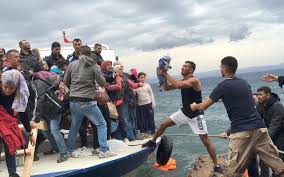
War, famine, unemployment and cultural persecution witnesses waves of displaced human refugees migrating away from their country of origin, seeking asylum in geopolitically and economically stable countries throughout the world.  From Syrian families to North African migrants, acute displacement of entire social and culturally diverse peoples into established geographically distinct locations creates incredible bilateral physical and mental health pressures on both established communities.  Inevitably because of cultural distinct behavior, prejudice, bias and persecution are predictable reactions from established sovereign societies whose governments attempt to balance humanitarian responsibilities with the practicality and political ramifications of open border policies.  The demands placed on host countries are enormous and efforts extended as good will gestures for altruistic needs can become overburdened with reactionary reprisal from host citizen further preventing assimilation and/ or integration of the refugee population. The civil backlash and fear of migrant majority-identified reactive fate-groups who tend, after their settlement and integration into the host countries, to form politically-oriented revolutionary groups that challenge host country authority, threaten acceptance of desperate souls seeking asylum from geopolitical and environmental threats.  Recent hostilities between ethnically displaced Sunni Muslims from Afghan and Syrian heritage on Danish soil that caused damage to property and injury to Danish police officers personify the cultural clashes that will impose misery on law desiring global citizens and prevent access to critical support services these migrants need to survive in their new locations. This paper addresses barriers to ethnic and cultural assimilation and integration into host countries.
The Refugee

The worldwide refugee crisis threatens peace, civility, national prosperity and the survival of people fleeing the ravages of war, famine and political oppression.  The number of forcibly displaced people worldwide reached almost 60 million at the end of 2014, the highest number in the past 70 years. This egress, particularly related to war, is a humanitarian tragedy. In the last two years, 15 million people fled Syria and Iraq; 1.1 million people have been displaced in Yemen; more than 500,000 have fled South Sudan; 190,000 in Burundi; and 300,000 in Libya. (Aiyer 2016) As persons desperately apply for asylum outside their home country, their goal is to obtain refugee status which affords them legal protections and guaranteed resources.  The UN charter for host nations, established by the United Nations Refugee Agency (UNRA) was ratified into law in 1951. Modifications in 1967 established protocols defining a refugee as someone crossing an international border “owing to a well-founded fear of being persecuted for reasons of race, religion, nationality, membership of a particular social group or political opinion.” (Gibney 2004; Ott 2011; UN 1951) These international laws addressing asylum offered by a host nation come at significant economic demands and cultural challenges for the receiving states.  The savior nation has the mandate for both protection and durable solutions for displaced individuals. (Gray 2001)  Implicit in this obligation is consideration of these refugees with natural laws, owing that every individual must be respected with basic human rights. One states failure to protect their citizens results in a secondary state rising to offer sanctuary, respecting these inalienable rights with their dedicated responsibility. (Betts 2009; Gibney 2004) The massive and acute movement of displaced persons causes host countries to pursue expedient and fluid solutions to accommodate these refugees while demands from their own citizens require they ensure domestic security, economic stability and social tranquility.

The humanitarian response

The outcry from nongovernmental organizations, religious groups and world citizens often drowns out government ambivalence and demands consideration of oppressed people. Internationally, the United Nations refugee agency (UNHCR) acting cooperatively with agencies in host nations, provide structure and guidance for assimilation and integrating these displaced people.  Most accepting nations including the EU and the United States (US), adopt these recommendations and mandates for processing, protecting and accommodating refugees. Refugee protection through resettlement and access to a social welfare support systems becomes the cornerstone of this international obligation. In each country refugee resettlement collaboratives exist to provide cultural amalgamation and adaptation, assisting some 60,000 to 90,000 persons per year in the US alone. Here, the refugee must navigate through the maze of Homeland Security and the State Department before the Office of Refugee Resettlement (ORR) in the U.S. Department of Health and Human Services. This agency is responsible for providing resettled refugees longer-term assistance, language education and social services that focus on early employment and self-sufficiency. (Nezer 2013)  Nevertheless, despite its noble assignment, both the US and overburdened EU programs are chronically underfunded and failing to meet refugee needs. In addition, the policies are rigid and do not address divergent health and socioeconomic factors specific to certain refugee groups. (Nezer 2013)  Many refugees require extended services in medical and psychological care, intensive local language training, and repetitive assistance at finding employment. (Ott 2011) Equally tragic is that some refugee groups have highly educated individuals with professional experience, but the prolonged pathway to US recertification makes their professional experience obsolete. (Abramowitz 2009) Common conflicts result from failed expectations and lack of participation between community members, stakeholders, and resettlement authorities.

We read daily about the surge of asylum seekers taxing countries throughout the EU. These sovereign economies are beyond capacity to respond to the humanitarian challenge, process asylum requests, and prepare for the integration of those accepted into their labor market. (Aiyer 2016)   Security, political, and social challenges are overwhelming. From the 12 million people in the Middle East demanding immediate refuge and asylum, to the several African nations in turmoil forcing hundreds of thousands of people to flee, access nations are choking from the burden.  Throughout Europe the doors are closing to displaced people, foreshadowing misery and even genocide at staggering numbers.  The moral gesture of benevolent aid is so strained that conflict within the communities receiving refugees is inevitable and aggressive dispute resolution strategies must address these issues with premeditative planning.
Concepts of assimilation and integration

The distinction between assimilation and integration into a new society should be differentiated. Assimilation occurs when the group dissolves into the dominant society, while integration denotes interaction with the dominant society while maintaining one’s own cultural distinct identity. Resettlement is a complex issue designed to meet superordinate goals like economic prosperity, cultural integration, and refugee well-being.  Unfortunately, current agencies are unable to prevent or defend the refugee from racism, prejudice and financial strain, focusing on immediate relocation and substantive immediate survival requirements instead of long term strategies for peaceful co-existence in their new communities.  (Gray 2001). Refugees should not be coerced to choose between successes in a new society by abandoning their cultural identity. Instead of measuring successful integration by assimilation, Rodríguez-García proposes a new model of refugee resettlement and cultural acclimatization which “reconciles cultural diversity with social justice and political equality.” (Rodríguez-Garcia, 2015) Globalization might physically mix cultures, but globalized cities are more polarized in terms of race, with cultural clashes segregating native from refugee populations throughout Europe and America. (Rodríguez-García, 2015)  The opportunity to integrate into a society and blend cultures while protecting ones identity is precarious for both recipient population and displaced refugee.  A 1997 UNHCR report on the integration of resettled refugees noted that the constraints to resettlement included lack of employment, racism, discrimination, delays in family reunification, inability to speak the local language, lack of recognition of qualifications and experience and inadequately resourced integration programs. (Chitkara 2015; Gray 2001)

Kunz argues that refugees’ orientation to their country of origin has a significant impact on resettlement. He identifies three different groups: First, ‘majority-identified’ refugees who identify with their nation but not with its government; second, ‘events-alienated’ refugees, which may include religious or racial minorities, with no intention to return to their home; and third, ‘self-alienated’ refugees, who no longer wish to identify with their nation. Refugee groups may also be ‘reactive fate-groups’ or ‘purpose groups’ depending on their attitude to displacement. Reactive fate-groups are typically made up of majority identified and events-alienated refugees fleeing from war or revolutionary change. (Kunz 1981) Although most groups assimilate into the host culture, many maintaining their own culture in duality, the majority-identified reactive fate-groups who still identify fiercely with their own countries tend to integrate poorly, form political groups, and demonstrate the highest risk of negative interaction with the host society. (Gray 2001)

Refugees are in a power submissive situation that creates conflicts intrinsic to feelings of victimization once the luster of resettlement has waned.  As Roy (2008) discussed, power dynamics are seen in cultural and structural interactions when dealing with the integration into different cultures.  Conflict is inevitable. Since power is identified as a process evolving and influencing people through a multilayered and fluid set of relationships, this power will be formed and manipulated by the social structures within which the native population with the resources have power-over the newly arrived refugee.  Roy asserts that power is embodied in cultural practices causing influence through organizational roles and cultural structure. For a host population exerting power over relocated foreigners, the power differential may lead to significant conflict.

The challenge of accepting refugees

A 2010 US Senate report charged that “resettlement efforts in many US cities are underfunded, overstretched, and failing to meet the basic needs of the refugee populations” and highlighted the significant issue of secondary migration, or refugees relocating from their initial location in the US. (Ott 2011)  The office of Refugee Resettlement (ORR) is tasked with providing refugees with critical resources to assist them in becoming integrated members of American society, but the funding, grants and assistance are calculated and dispersed at the initial entry points and do not follow the refugees that migrate within the US. People move primarily for family and jobs but the internal relocation creates greater demand for services with less resources. (Ott 2011)   Cultural assimilation emerges as one of the most complex issues related to resettlement. Morgan argues that prioritizing assimilation leads to a “de-ethnicization challenge” (Morgan, 2015.). As an alternative, he suggests that settlement agencies should focus on finding solutions that ensure refugees retain their own culture while still becoming part of a new community. In addition, functional integration includes participation and contributions to the host social, cultural and economic life through employment and education. Collaborative agencies must match opportunities with refugee skills while providing adequate universal healthcare for physical, psychological, and spiritual wellbeing. The core unit of support, the family, must be reunited. Cultural exchange will introduce bicultural enrichment.  Governments can no longer shoulder the economic responsibility of this humanitarian mandate so these goals are now achieved through public-private partnerships between state run agencies and NGO philanthropic organizations, religious groups and municipalities.

Conflict in the refugee population

Global research demonstrates a positive economic impact on local communities expanded by influx of refugee populations, but community relationships can be threatened through cultural misunderstandings and discrimination, especially when refugees appear to be benefitting from social welfare and job creation disproportionately to the local citizen. (Guerin 2007; Ott 2011; Ager 2008) The strained relationship creates an atmosphere of tension and distrust. Unfortunately, conflict within and against the refugee culture does result in ethno civic rejection and upheaval through bias, xenophobia, political backlash and ultimately violence. The foreign culture becomes the target of anger and vehemence.   As Galtung notes, (Galtung 1990) ‘Cultural violence’ is used to legitimize oppression in its direct and structural forms. Threats and perceptions of compromised safety by the refugees leads to misery, morbidity, loss of identity and purpose through alienation and perceived limited freedom. Violence is needs-deprivation causing hopelessness, a deprivation/frustration syndrome that causes apathy, withdrawal and in some, outward aggression and civil unrest. (Galtung 1990)

Racism and discrimination are pervasive based primarily on ethnicity, culture and religious affiliations. Refugee exposure to repetitive physical and psychological trauma creates medical challenges, particularly in mental health care and healthy living choices.  This in turn effects employment productivity and peaceful coexistence within and outside their communities. (Chitkara 2015). Paradies (2015) defines racism as an “organized systems within societies that cause avoidable and unfair inequalities in power, resources, capacities and opportunities across racial or ethnic groups.”  Racism manifest in several ways, including aggression, stereotypes, and discrimination. Refugees report inequality in the job market as well as racist slurs in the streets and damage to personal property.

Refugees arriving in their new country experience an initial period of excitement and enthusiasm, followed frequently by feelings of survivor’s guilt and displacement anxiety. This distress may result in prolonged sadness, despondency and depression.  Additional threats from racism and discrimination only worsen this condition. The flames of discontent and barriers to resettlement create conflict within the community between refugees and with locals. Without a strong ethnic support community, maintaining traditional social and familial practices is impossible as refugees attempt to balance the need for integration with the desire to maintain their cultural integrity. Some groups of refugees are unable to establish strong and united ethnic communities because “old political allegiances continue to influence and divide refugee communities.” (Gray 2001)

In both EU countries and the US, economic downturns and higher unemployment rates cause serious regional budget shortfalls.  One effect is a rise in anti-immigrant laws across this country with challenges from many communities to refugee relocations because of additional taxation to finance resettlement.  There are statewide legislative and executive efforts to restrict and deter refugee resettlement. This anti-refugee sentiment has emboldened local officials looking to target refugee resettlement with anti-immigrant legislation. (Nezer 2013; NIJC 2012)  New refugees are openly opposed. People are resentful when scarce resources supplemented through federal funding defer medical, education, housing, and transportation needs to the refugees over the local population.  In particular in the US, rural communities now see a rise in relocation of entire cultural groups of refugees.  In these smaller communities the visibly different cultural, racial, and religiously affiliations in previous homogeneous communities breeds incidents of racism and prejudice.( Gray 2001) People in the host country might also misinterpret factors driving refugee relocation misattributing the displaced people as having ‘chosen’ to move, exploiting better economic opportunities in the host country at the expense of the native population. The concern about newcomers and their impact on a community’s established way of life is heightened now that many refugees resettled today are Muslims. Valtonen (1998) points to racist attitudes against Muslims as the predominant factor hindering successful social interaction within receiving society. The few cases of refugees connected to terrorism creates a nationalistic xenophobia that generates support for anti-immigration and anti-refugee assistance even from political moderates. Women in particular deal with prejudice and hostility resultant from restrictions on their dress and introverted social mannerisms, following the traditions of their own country, but stark behavior in their new melded cultures. (Grey 2001).

Potential solutions to conflict resolution

As Avruck and Black propose, ethno-conflict theory and associated conflict resolution techniques stress that cultural orientation must be critically considered to formulate models for successful dispute resolution. (Avruck 1991) Group identity through cultural awareness is secondary only to food and shelter for humans to find meaning in their lives and threats to this cultural harmony stress the fabric of existence for any sub group in society. Avruck stresses that the cross-cultural perspective on conflict management requires local practical understanding and traditional methodology of dispute management. These techniques and practices (ethno-praxis) in refugee populations will likely be different and possibly adverse to the local methods traditionally used to address conflict situations.

Research demonstrates that refugees are empowered through early employment and become active, contributing participants in their communities when ethnic support and family stability is available. (Ott 2011) In the US, the 1980 Refugee Act requires “available sufficient resources for employment training and placement in order to achieve economic self-sufficiency among refugees as quickly as possible” in order to maintain the diversity of cultural expression during integration, the concepts of acculturation are supported. (Kenny 2011)  Individuals embrace and participate in the dominate culture without divorcing or suppressing their own unique social heritage and traditions. When host communities understand the benefits of the cultural diversity, express humanistic acceptance of different perspectives and support ethnically diverse integration that modifies the status quo, the refugees report a welcoming environment where they feel less alienated and adopt a morphogenic diverse new cultural narratives as their own. (Berry 1997)

Local policies demand integration with refugee leaders collaborating to establish functional groups for successful co-existence that enriches both refugee and local civic objectives. The multitude of additional agencies, such as trades unions, not-for profit enterprises, and employers might complement and support immigrant integration and minimize prejudicial rejection and intended alienation. Finally, a number of current refugee /host partnerships stimulate independence by supporting immigrant entrepreneurship. (Bruno 2011). Establishing culture specific immigrant associations provide the first line of access to successful transition, access to economic opportunities, social support services and psychosocial support designed to resolve the fears inherent in relocation. Factually, evidence shows that refugees often stimulate economic development by increasing the tax base, starting new businesses, revitalizing neighborhoods, filling labor shortages, attracting investment from overseas, renting apartments, patronizing local businesses, and bringing federal funds directed toward schools and other public programs to local communities. (Elliott 1997)
Nezer (2013) has a series of recommendations designed to preemptively anticipate conflict and prepare for seamless integration, respecting autonomy but stimulating ethnic integration through collaborative systems design. Specifically, she calls for resettlement agencies to launch a funded, proactive organizing initiative, coordinated nationally but strongly rooted in local action, to raise awareness in communities about the benefits of resettlement and proactively prevent resettlement backlash. Nezer demands a quick response plan to address emerging anti-resettlement activity while generating a new “buzz” and talking points that discuss the humanitarian goals of resettlement and historical role of the US in protecting these needy souls.  She believes that the most successful plans to integration require partnering with immigrant advocates who ensure collaboration on advocacy in areas of stress or conflict. Given the economic resources allocated each year on refugee relocation, a dramatically improved federal tracking system that measures and reports success must be made transparent for the host country citizens to understand and accept the benefits of cultural diversity and refugee assimilation. Ultimately, the systems in place that are successful must be replicated globally to ensure efficiency and successful refugee relocation programs are celebrated and reproduced.

In Conclusion, the role of the ADR professional.

Refugee insertion into unprepared communities defensive about shared resources creates a critical access point in which expertise in dispute resolution structure and application will have effective impact and create lasting peaceful co-existence.  Critical pathways designed to proactively address refugee physical, mental and spiritual needs, orchestrated with collaborative efforts by recipient community stakeholders working together with refugee advocates and leaders, provides prospects for transformational cultural exchange. As Beth Roy points out, we need to be willing and able to engage without judgment about both “intentions and consequences of cultural styles, as we see them occurring in the room, in the context of people’s historical and cultural experiences in the world.” As such, we have the unique perspective to separate ourselves from the dynamic of conflict utilizing the skills and motivation to empower foreign people while demanding justice and equity. The ADR professional can be a powerful agent for change, challenging inequality and taking on the creative process of “rebuilding relationships as exercises in justice”. (Roy 2008).
Conflict resolution experts subserve multiculturalism, stressing tolerance to variables such as race, gender, class, age, sexual orientation, religion, physical ability, and language. Facilitating transformational enlightened perspectives regarding diversity through cultural awareness and sensitivity adds to the collective consciousness and enriches the lives of all those willing to repress fear and vulnerability while embracing displaced victims of natural or geo-political dislocation. (Loode 2011) Dialogue between participants stimulates shared ideas and experiences which might convert prevailing wary discrimination and even subliminal prejudice. (Banathy 2005.) Dialogue encourages participants to examine and share “preconceptions, prejudices, and the characteristic patterns that lie behind their thoughts, opinions, beliefs, feelings, and roles” (Bohm 1991). ADR professionals are uniquely qualified to combat modern racism through systems design in communities integrating refugees. Focusing on trust building while moving beyond a calculus based cautious hand of minimal assistance to a knowledge based trusting co-dependence where bias, prejudice and faulty attributions errors steeped with animosity no longer imprisons ignorant minds. Through advocacy, facilitation and mediation of anticipated and evolving conflict, the ADR professional might follow LeBaron’s (2003) advice using dialogue “to understand the influence of existing cultures and the differences that distinguish them without letting a particular culture or cultures dominate the discourse.”  By providing insight into both refugee and host citizens values, logic, and stories both people will realize that despite language and customs differences, their interests and core needs are often closely aligned, effectively bridging intercultural conflicts through awareness, acceptance and mutual respect.


Works Cited.

  1. Abramowitz, M et al. Iraqi Refugees in the United States: In Dire Straits, June 2009, International Rescue Committee report. New York, NY 10168 | theIRC.org
  2. Ager, A. and Strang, A. (2008) ‘Understanding Integration: A Conceptual Framework’, Journal of Refugee Studies, 21(2): 166-187.
  3. Aiyer, S, Barkbu, B et al. (2016) The Refugee Surge in Europe: Economic Challenges. IMF publication. Feb 2016.
  4. Avruch, Kevin (Jan 2016). Culture and Conflict Resolution United States Institute of Peace. (Kindle Locations 493-496).
  5. Avruck, K and Black, P. (Jan 1991) The Culture Question and Conflict Resolution. Peace and Change. Vol 16 (1) pp 22-45
  6. Banathy, B. H., and Jenlink, P. M. (2005) Dialogue as a Means of Collective Communication. New York: Kluwer Academic/Plenum, 2005. Pp 39-43
  7. Betts, A. and Kaytaz, E. (2009) ‘National and International Responses to the Zimbabwean Exodus’, New Issues in Refugee Research, UNHCR paper 175, July
  8. Berry, J. (1997) ‘Immigration, Acculturation, and Adaptation’, Applied Psychology: An International Review 46(1): 5-68.
  9. Bruno, Andorra. (2011) U.S. Refugee Resettlement Assistance. Congressional Research Service, CRS report for congress. January 2011.
  10. Chitkara, Hirsh, Gao, Yilin et al. (2015) American Resettlement Agencies and Their Effectiveness in Helping Middle Eastern Immigrants and Refugees Navigate Social and Financial Challenges. Office of Refugee Resettlement Annual Report to Congress. U.S. Department of Health and Human Services, 11 June 2015
  11. Elliott, Samuel. (1997). ‘Like Falling Out of the Sky’: Communities in Collision. In C. Bell Ed. Community Issues in New Zealand. Palmerston North: Dunmore Press Ltd
  12. Galtung, J. (1990) Cultural Violence. Journal of Peace Research, vol. 27, no. 3, 1990, pp. 291-305.
  13. Gibney, M. (2004) (7) The Ethics and Politics of Asylum, Cambridge Press 2004
  14. Gray, A and Elliott, S. (2001) Refugee Resettlement Research Project ‘Refugee Voices. New Zealand Immigration Service. Dept. of Labor. May 2001
  15. Guerin, P. and Guerin, B. (2007) ‘Research with refugee communities: Going around in circles with methodology’, The Australian Community Psychologist. Vol. 19(1)
  16. Kenny, P. (2011) ‘A Mixed Blessing: Karen Resettlement to the United States’, Journal of Refugee Studies 24(2)
  17. Kunz, E. F. (1981). Exile and Resettlement: Refugee Theory. International Migration Review, 15(142)-51
  18. LeBaron, M. (2003) Bridging Cultural Conflicts: A New Approach for a Changing World. San Francisco: Jossey-Bass, 2003.pp 269-271.
  19. Loode, S. (2011) Navigating the Unchartered Waters of Cross-Cultural Conflict Resolution Education. CONFLICT RESOLUTION QUARTERLY, vol. 29 (1)
  20. Morgan, John H. (2014) Islam and Assimilation in the West: Religious and Cultural Ingredients in American Muslim Experience. Journal of Religion & Society 16 (2014):
  21. Nezer, Melanie.(2013) Resettlement at Risk: Meeting Emerging Challenges to Refugee Resettlement in Local Communities. JM Kaplan. Feb 2013.
  22. (2012) No Victory for Arizona: Supreme Court Strikes Down Most of SB 1070 Immigration Law, Punts on “Papers Please” Provision, Immigrant Justice, June 25, 2012. http://www.immigrantjustice.org/press_releases/SupremeCourtSB1070ruling.
  23. Ott, E (2011). Get up and go: refugee resettlement and secondary migration in the USA. Oxford press. Division of International Protection UNHCR, Geneva. Sept 2011.
  24. Paradies, Yin et al. (2015) Racism as a Determinant of Health: A Systematic Review and Meta-Analysis.” PLoS ONE 10.9 (2015)
  25. Rodríguez García, Dan. (2010) Beyond Assimilation and Multiculturalism: A Critical Review of the Debate on Managing Diversity. Journal of International Migration and Integration 11.3
  26. Roy, B. (2008) Power, Culture, Conflict. In Re-Centering Culture and Knowledge in Conflict resolution Practice. Syracuse University Press. 2008. pp 179-194
  27. UNITED NATIONS (1951) United Nations Treaty Collection Convention relating to the Status of Refugees, Geneva 28 July 1951.
  28. Valtonen, K. (1998). Resettlement of Middle Eastern Refugees in Finland: The Elusiveness of Integration. Journal of Refugee Studies, 11(1), 39-60.